
Article Directory
Chevron's Suriname Bet Isn't About Oil. It's About Appeasing a Disappointed CEO.
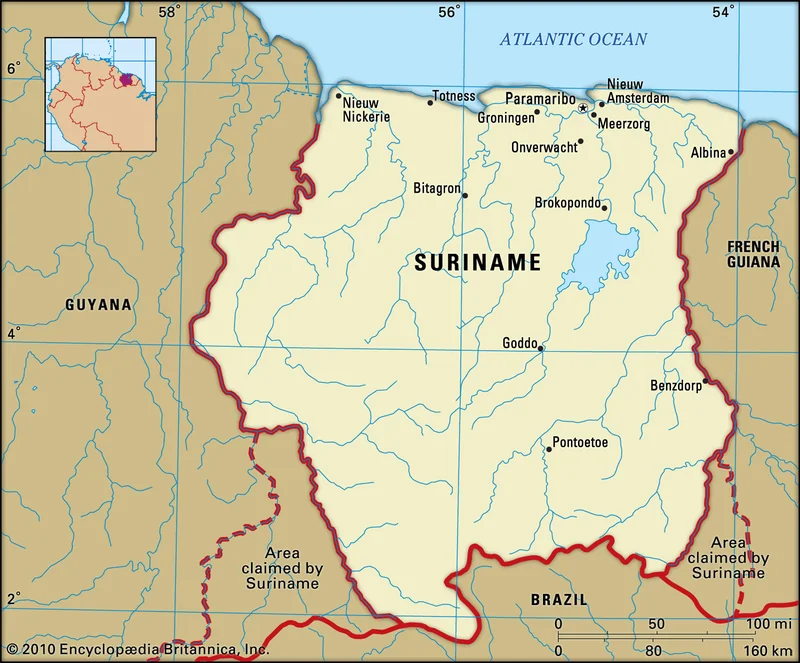
This month, a harsh-environment jack-up rig called the Noble Regina Allen is being maneuvered into position 78 kilometers off the coast of Suriname. The rig, a hulking piece of steel and machinery capable of drilling over 10 kilometers into the earth's crust, is there for one purpose: to punch a hole in the seabed and see what comes up. The target is the Korikori-1 exploration well in Block 5. On paper, this is just another operational update in the global energy chess game, with news that Chevron set to begin drilling Suriname well later this month.
But it isn't.
My analysis of Chevron's recent public statements suggests this specific drilling operation is less about a geological hypothesis and more about a corporate one. This isn't just exploration. This is a direct, high-cost, and very public response to an edict from the top. Chief Executive Mike Wirth has put his exploration division on notice, and the Korikori-1 well is their first formal answer.
The stated facts are straightforward. Chevron, as the operator with a 40% interest, is leading a consortium with Suriname’s state-owned Staatsolie (40%) and QatarEnergy (20%). The drilling is scheduled to take approximately 90 days in relatively shallow water (around 40 meters), which mitigates some, but not all, of the operational risk. Noble Corporation’s contract for the rig is valued at $17.7 million for the three-month window from October through December. It's a standard, if expensive, roll of the dice.
But why this well, and why now? To understand the pressure behind this specific operation, you have to look past the technical specs and listen to the words coming out of Chevron’s C-suite.
A Public Mandate for Results
During the company’s second-quarter earnings call, CEO Mike Wirth made a statement that, in the carefully calibrated world of corporate communications, was the equivalent of a public dressing-down. He said he was “not happy with the results out of exploration over the last few years.” He admitted his team had been “operating in a pretty narrow range,” a clinical assessment that translates to "we haven't been finding enough oil."
I've looked at hundreds of these earnings call transcripts, and it's rare to see a CEO so publicly and bluntly express dissatisfaction with a core operational unit. This wasn't just an off-the-cuff remark; it was a signal to the market and, more importantly, a directive to his own people. The message was clear: the strategy needs to change, and we need to see results. Fast.
This makes the Korikori-1 well something of a litmus test. Chevron’s exploration efforts are like a venture capital portfolio. The business model accepts a high failure rate—most exploration wells, after all, are dry holes. But the portfolio depends on hitting a few massive, multi-billion-barrel discoveries to pay for all the misses. Wirth’s comment implies that Chevron's portfolio has been generating too many "misses" and not enough "hits." The company has been spending the capital without generating the commensurate discoveries to replenish its reserves. So, is the Suriname well a genuinely promising geological prospect, or is it a high-cost exercise in corporate signaling to show the CEO that his message has been heard?
The pressure is amplified by geography. Chevron just spent a considerable amount of time, energy, and legal capital to finalize its acquisition of Hess, a deal whose crown jewel is a 30% stake in the prolific Stabroek block right next door in Guyana. That block, operated by rival ExxonMobil, is one of the most significant oil discoveries of the century. Chevron now owns a piece of that wild success, but it was success they had to buy, not find. Having a front-row seat to Exxon's triumph in Guyana must surely sharpen the mandate for Chevron's own exploration team to deliver a homegrown victory in the same basin.
The 90-Day Clock
The Noble Regina Allen rig is now on site, or will be within days. The drilling will commence, and for the next 90 days, a stream of data will flow from the drill bit to Chevron’s analysts. They’ll be looking for hydrocarbon indicators, pressure readings, and core sample quality. The operation itself is a complex logistical exercise, with supplies coming from Surinamese ports and personnel being helicoptered in from Paramaribo, a move Staatsolie highlights as a benefit for local businesses.
But the real data point to watch isn't just the geological survey. It’s the corporate response. This well is the first major test for Chevron's new exploration chief, a former TotalEnergies executive brought in to shake things up. It’s also the first tangible outcome of the company's promise to be more “active in exploration” in frontier regions like Suriname, Namibia, and Egypt.
If Korikori-1 hits, it’s a massive validation of the new, more aggressive strategy. It proves that Chevron can still discover major oil fields on its own terms, quieting internal and external critics. It would instantly re-rate the value of their other holdings in the region and provide a powerful narrative of a corporate turnaround.
But what if it’s a duster? A single dry hole is never the end of the world in this business. But given the context, a failure here would be particularly damaging. It would suggest that, despite the CEO’s public call to action, the exploration division is still struggling to generate winning prospects. It would raise serious questions about the quality of the acreage they hold and their ability to interpret the complex geology of the Suriname-Guyana Basin. How many more expensive failures will the C-suite tolerate before a more fundamental overhaul is ordered?
A Referendum in Real-Time
Ultimately, the fate of the Korikori-1 well is a binary outcome. It will either find commercially viable quantities of hydrocarbons, or it won't. But the significance of this particular project runs deeper. For the next 90 days, this isn't just an exploration well; it's a performance review being conducted in real-time, under immense pressure. The results will tell us less about the geology of Block 5 and more about the internal geology of Chevron itself—whether the company's core discovery engine can respond to a clear mandate from a CEO who has publicly declared he is not satisfied.