Article Directory
The trajectory of a new financial instrument is often a story told in two data sets: the price chart and the ledger. For the layer-1 blockchain project calling itself Plasma, the price chart was unambiguous. After launching its native XPL token on September 25, the asset spiked, reaching a peak of nearly $1.70. By the following Wednesday, it was trading at $0.83. The value erased was over 50%—to be more exact, a 51.2% drop from its peak. A catastrophic failure for early retail buyers.
The second data set, the blockchain ledger, was more complex but told a potentially more damning story. As the chart cratered, the project’s community, a distributed network of stakeholders and amateur analysts, began its own forensic audit. The immediate suspect in any post-launch collapse is the team itself. The accusation was straightforward: insider selling, likely through a time-weighted average price (TWAP) algorithm designed to offload a large position without creating a single, dramatic price shock.
Plasma’s founder, Paul Faecks, issued a denial. "No team members have sold any XPL," he stated, stressing that team and investor allocations were subject to a three-year lock with a one-year cliff. On the surface, it was a categorical rebuttal. But the on-chain data, the immutable record of transactions, presented a significant discrepancy. An independent analyst, ManaMoon, traced a flow of more than 600 million XPL tokens from what was identified as the Plasma team vault to various exchanges in the days before the public launch.
This is the point where a simple narrative of market volatility becomes a case study in corporate semantics. The community pushed back against Faecks’s denial, with one user, crypto_popseye, highlighting the precision of the founder’s language. The statement explicitly ruled out sales by "team members." It said nothing, however, about other large token allocations, such as those designated for "ecosystem and growth." The accusation was that the denial was technically true but substantively misleading. Faecks, for his part, stated the team was "laser-focused on building" and would not comment further, a common posture when the numbers become inconvenient.
I've analyzed hundreds of corporate statements and SEC filings, and this kind of carefully-worded denial is a classic signal. It’s designed to address a specific accusation while ignoring the larger, more pertinent question. The market wasn't asking if "team members" personally sold from their locked wallets; it was asking if the project, as an entity, flooded the market with tokens from other, unlocked allocations. The silence on that front is, in itself, a data point.
The Arbitrage of a Scientific Name
A Question of Substance
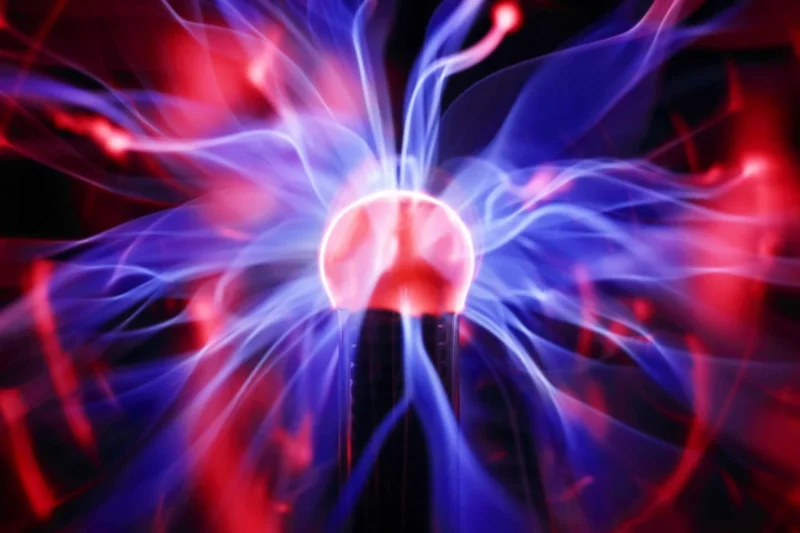
The name of the project, "Plasma," is worth considering. In physics, plasma is the fourth state of matter, an ionized gas of superheated atoms. It is the substance of stars, of lightning, of the auroras that dance at our planet's poles. It is a subject of profound scientific inquiry, representing both immense power and fundamental mystery.
In late September, around the same time the XPL token was collapsing, photographers in Wyoming were capturing a different kind of plasma event. It’s called a Strong Thermal Emission Velocity Enhancement, or STEVE. It’s a rare phenomenon, a ribbon of super-heated plasma appearing during intense auroras. One observer, Andrea Cook, described it as an "unholy bright" searchlight in the sky. NASA instruments have measured the temperature inside a STEVE at 5,430 degrees.
Unlike an aurora, its origins are almost completely unknown. It is a genuine scientific puzzle. The data gathered from a STEVE—spectrographic analysis, temperature readings, velocity measurements—is collected for the sole purpose of understanding a natural phenomenon. There is no marketing narrative, no token allocation, no carefully-worded denial. The data simply is. It is a thing of substance, observed and measured.
There is a third "plasma" that warrants discussion, found within the doughnut-shaped tokamaks of fusion energy research labs. Here, plasma is the fuel for a reaction that could one day power the world. Controlling it is one of the most complex engineering challenges ever undertaken. The plasma inside a fusion reactor is notoriously unstable; sudden changes known as edge-localized modes (ELMs) can release bursts of energy that damage the reactor walls.
To monitor this, scientists rely on a vast array of diagnostics and sensors. But even these have limitations. A recent paper in Nature Communications detailed a new AI, Diag2Diag, developed by researchers at Princeton and other institutions. Its function is remarkable: it analyzes data from existing sensors to generate a synthetic, high-resolution data stream for a sensor that isn't there. It fills in the gaps. (The project used real-world data from the DIII-D National Fusion Facility.) The goal of this research is not to obscure information, but to generate more of it—to create a clearer, more detailed picture of reality in order to control it. The AI’s data even provided new evidence supporting a key theory about how to suppress those damaging ELMs. This work is about using data to increase stability and robustness.
Which brings us back to the XPL token. We are left with three instances of the word "plasma." One is a rare, beautiful, and poorly understood natural event. The second is a fiercely complex substance at the heart of a technology that may define the next century, a field where the highest priority is generating clearer data.
The third is a digital asset whose primary output in its first week of existence was a 51.2% price collapse, a cloud of community suspicion, and a founder’s statement that answered a question no one was asking. The on-chain data suggests a massive distribution of tokens onto the market. The project's public statements appear engineered to deflect from this data. Where fusion scientists use AI to fill in missing data for the sake of clarity, the Plasma project’s communications seem to create gaps for the sake of plausible deniability. One is a search for truth. The other, it seems, is a marketing exercise that soured.
###
The Nominal Value Problem
###
The core issue here is not the volatility of a token, which is an expected feature in its asset class. The issue is the arbitrage of a name. By calling itself Plasma, the project implicitly borrows the gravitas of a fundamental concept in physics. Yet, its behavior reflects the opposite of the scientific method. Science seeks to clarify, to reveal, and to build understanding through transparent data. The data trail for XPL, from the 600 million tokens moved pre-launch to the evasive denial, suggests a primary goal of distribution, not discovery. One plasma is a state of matter; the other appears to be a state of marketing.
Reference article source: