Article Directory
The sky over Clark, Wyoming, tore open at 12:14 a.m.
One moment, Andrea Cook was watching the ethereal dance of a powerful aurora. The next, a searing ribbon of light erupted from the mountains, an “unholy bright” streak she described as a searchlight aimed at the heavens. For a few precious minutes, she and a handful of others across the state witnessed a STEVE—a Strong Thermal Emission Velocity Enhancement. This isn't an aurora. It’s something different, something hotter, a 5,430-degree river of plasma flowing through the upper atmosphere for reasons we are only just beginning to grasp.
When I see stories like this, I feel a familiar spark. We look at the sky and see a mystery—a super-heated, luminous phenomenon that appears alongside the familiar but is governed by its own unknown rules. It’s beautiful, fleeting, and unbelievably powerful. And it strikes me that this celestial event is the perfect metaphor for our entire technological moment. We are living in an age of plasma.
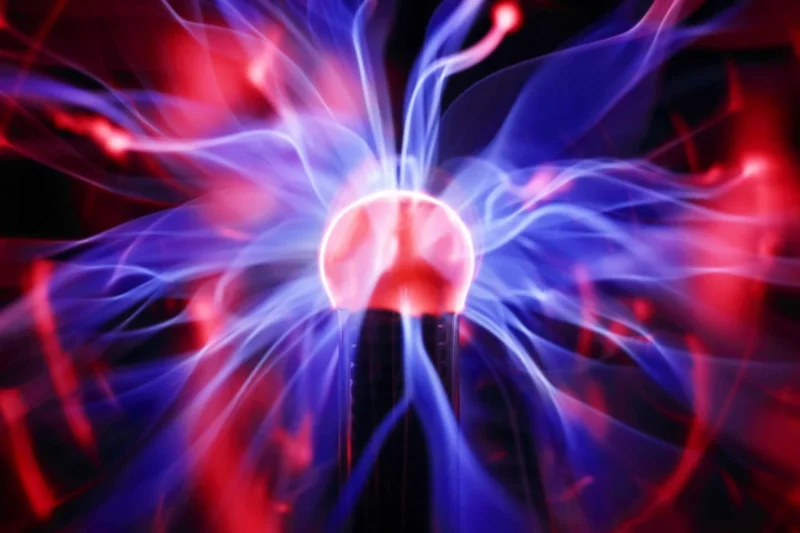
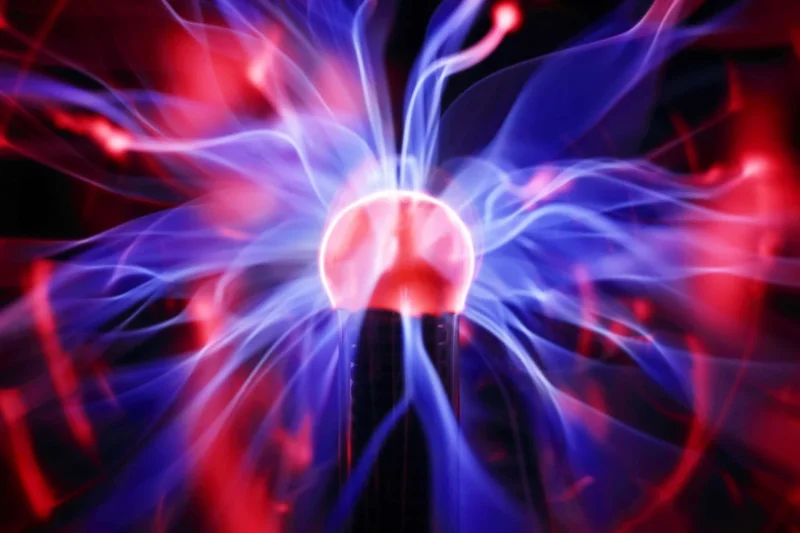
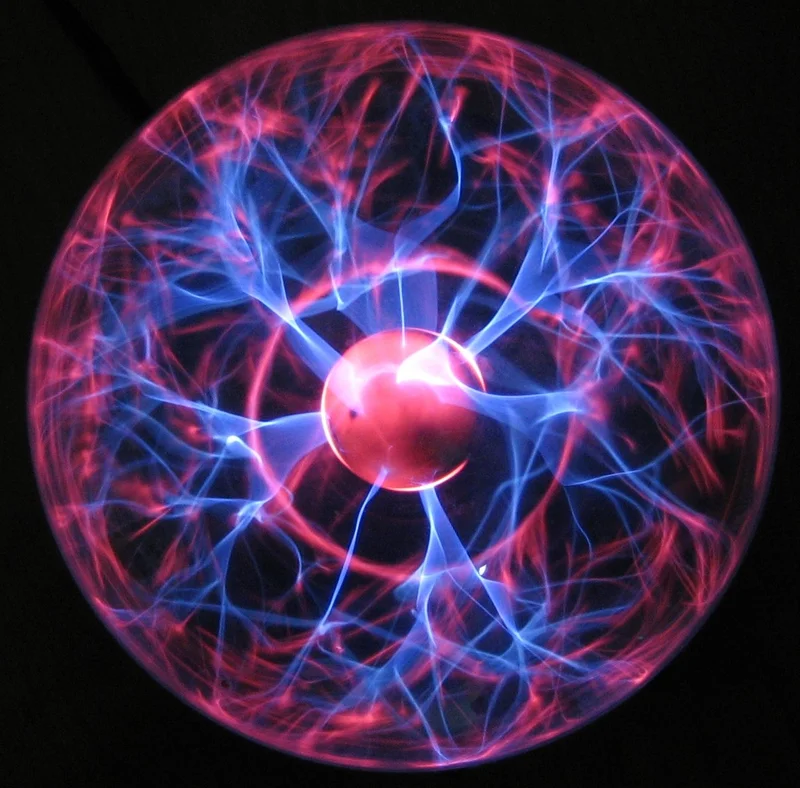
Not just the astrophysical kind, but the very idea of it. Plasma is the fourth state of matter, a super-heated, energized, and often chaotic condition where new possibilities are forged. It’s the state of stars. And right now, we are building our own stars, right here on Earth.
Plasma is the New Fire: From Fusion Reactors to Financial Revolutions
From Cosmic Wonder to Contained Sun
I want you to think about what it takes to replicate that celestial fire. Down in Everett, Washington, a company called Zap Energy is doing just that. They are building a fusion power plant, and their progress is breathtaking. They aren’t just creating a flicker of plasma; they’re running their Century test platform with sustained, repetitive shots—one every five seconds, for hours on end. Each pulse is a filament of plasma carrying up to 500,000 amps of current, about twenty times stronger than a bolt of lightning, inside a chamber no bigger than a water heater.
Their approach uses something called a sheared-flow-stabilized Z-pinch—in simpler terms, it means they are using an incredibly powerful electrical pulse to generate a magnetic field that crushes a stream of gas into a tiny, intensely hot, and surprisingly stable line of plasma. When I first read about the Zap team achieving sustained, repetitive shots while capturing the heat in circulating liquid metal, I honestly just felt a jolt of pure optimism. This is the kind of breakthrough that reminds me why I got into this field in the first place. This isn’t just a lab experiment anymore; this is the hard, gritty engineering of building a commercial fusion system, solving the systems integration problem that has been overlooked for so long. The sheer momentum here is staggering—the jump from single shots to a thousand consecutive plasma pulses in a three-hour campaign shows the gap between a theoretical future and a functional reality is closing faster than we can even comprehend.
But with great power comes an almost terrifying responsibility. The same word, “plasma,” also flows through our own veins.

The blood plasma that organizations like CSL Plasma, Biolife, and Grifols collect is the river of life, the liquid medium that carries everything our bodies need to function. We have become masters of handling it, separating it, and using its components to save lives. It’s a delicate, life-giving substance. And when our technology fails it, the consequences are immediate and severe.
Just this week, 3M issued a serious correction for its Ranger Blood/Fluid Warming System. These devices are used in hospitals to warm blood and plasma before a transfusion. The problem? The machine couldn’t actually warm the fluid fast enough at the flow rates it promised, creating a risk of hypothermia for the patient. It’s a stark reminder. Whether we’re dealing with a 5,430-degree celestial ribbon, a fusion reaction, or the simple act of warming the plasma in blood for a patient, controlling these states of energy is a task that demands absolute precision. The stakes are, quite literally, life and death.
This brings me to the newest frontier, a place where the term “plasma” is being redefined once again. We’ve seen it in the heavens, we’re building it in our labs, and it sustains our bodies. Now, we’re creating it in our computers.
A new blockchain, a foundational layer for a new digital economy, has just launched. Its name? Plasma. Its token, XPL, soared to a multi-billion dollar market cap within days of its debut, backed by an unprecedented $2 billion in liquidity from day one.
Now, it’s easy to be cynical. You might look at the headlines and see that one of the first things to explode on this serious financial network was a meme coin called “Trillions,” which briefly hit a $60 million market cap. It’s based on an internal company meme about the future size of the stablecoin market. This looks chaotic, frivolous even. But I urge you to look closer.
This is not a sign of immaturity; it’s a sign of explosive, creative energy. Think of it like the early days of the printing press. The first things printed weren’t all grand philosophical treatises; many were pamphlets, indulgences, and woodcuts that the establishment of the day found scandalous or silly. That chaos was the crucible of a revolution. The same is true for the early internet. What we see on the Plasma network is the digital equivalent of a super-heated, energized state. The name isn’t an accident. It’s a declaration of intent: to create a high-velocity, low-friction environment for value to move. The “Trillions” meme isn’t just a joke; it’s a viral, collective statement of audacious belief.
When you see whales accumulating millions of dollars in XPL and retail traders creating a positive delta of tens of millions in buy volume, you are not just seeing numbers on a screen. You are witnessing the formation of a new kind of consensus, a new center of gravity. You are seeing energy coalesce into structure.
From the Wyoming sky to the heart of a fusion reactor, from the warmth of our own blood to the lightning-fast settlement of a digital transaction, plasma is the story of our time. It is a state of immense energy, of profound transformation, of beautiful and sometimes terrifying chaos that precedes the creation of something new. The question for us is, what will we build with all this fire?
The Fourth State of Progress
We are no longer just observing the universe’s most powerful states of matter; we are actively architecting them. We are moving from being inhabitants of a world defined by solids, liquids, and gases to becoming creators in a world of plasma—celestial, atomic, biological, and now, digital. This isn't just another technological shift. It is a fundamental change in our relationship with energy and creation itself.
Reference article source: