Article Directory
So, Florida's Space Coast is about to break its annual launch record. Ninety-four rockets by November. A hundred by year's end, probably. Everyone's supposed to be popping champagne and high-fiving about American ingenuity. Me? I just feel… tired.
It’s not progress anymore, it's production. Cape Canaveral has stopped being a gateway to the heavens and has turned into a cosmic conveyor belt, spitting out satellites like a Pez dispenser on overdrive. Another Starlink batch, another communications bird, another secret military payload. The schedule for November is so packed it looks less like a calendar and more like a bus station departures board during a holiday rush. And honestly, I’m starting to wonder if anyone is actually paying attention to what’s on these rockets.
The SpaceX Monotony Machine
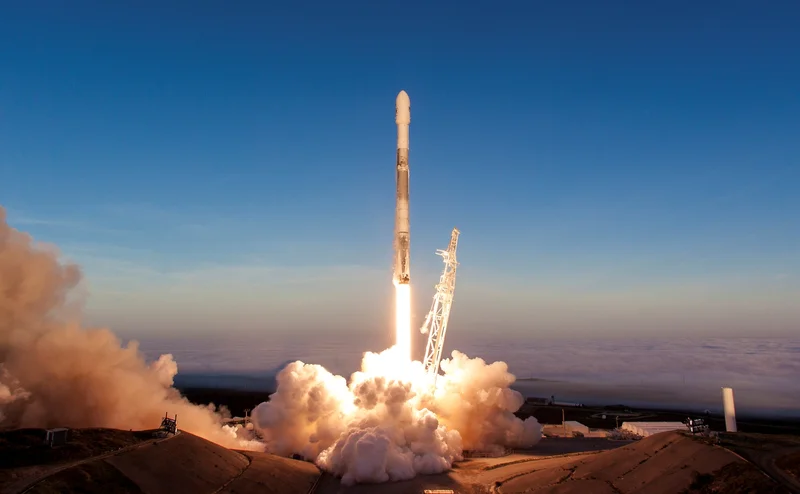
Let’s be real for a second. The bulk of this "record-breaking" pace is just Elon Musk carpet-bombing low-Earth orbit with his Starlink internet satellites. We’ve got three Falcon 9 launches for Starlink packed into less than a week in early November. November 5th, 8th, and 10th. It’s become so routine that it barely qualifies as news. It’s logistics. It’s freight.
I remember when a rocket launch was an event. You’d stop what you were doing to watch. Now, it’s just background noise, the dull industrial hum of the 21st-century space race. SpaceX has perfected the art of the rocket launch to the point of utter boredom. Good for them, I guess? They made landing a 15-story-tall tube of explosives back on Earth look as exciting as a FedEx delivery.
And for what? So someone in rural Montana can stream 4K Netflix while the night sky gets progressively ruined by streaks of light? I’m not saying global internet isn’t a noble goal, but at what cost? Are we just going to keep launching these things until low-Earth orbit is an impassable junk field? It ain't a question of if, but when.
This relentless pace feels less like a bold vision for humanity's future and more like a brute-force solution to a business problem. It’s efficient, it’s impressive, and it is profoundly, soul-crushingly uninspiring.
A Parade of Billionaire Dreams and Government Checks
Beyond the Starlink churn, November offers a glimpse into the other flavors of the space industry. You’ve got the old guard, United Launch Alliance, lofting a Viasat satellite on their trusty—and ridiculously expensive—Atlas V. It’s a solid rocket, but it feels like watching a company bring a beautifully crafted musket to a drone fight.
Then you have the main event, the one everyone is pretending not to be nervous about: Blue Origin’s second New Glenn launch. This is the big one. The beast. Jeff Bezos’s answer to Musk’s Starship, finally slated to fly a real mission for NASA, sending the ESCAPADE spacecraft to Mars. This is supposed to be the moment Blue Origin proves it’s more than just a suborbital joyride service for celebrities. No, that's not fair. It's supposed to prove they can actually compete. But after years of delays and setbacks, can they really pull it off without a hitch? What happens to the narrative if the most anticipated non-SpaceX launch of the year blows up on the pad or misses its window? The pressure is immense.
But the real wild stuff, the truly bizarre Silicon Valley fever dreams, are tucked away on these rideshare missions. A recent Commercial space station demo, data center precursor launch on SpaceX Bandwagon-4 mission – Spaceflight Now shot a satellite into orbit for a startup called Starcloud. Their big idea? To put data centers in space. They launched a small fridge-sized satellite carrying an Nvidia H100 GPU, claiming that in space you get "unlimited, low-cost renewable energy."
Give me a break. Unlimited energy? Offcourse, if you ignore the monumental, carbon-spewing cost of the rocket launch to get it there in the first place. Their CEO predicts that "In 10 years, nearly all new data centers will be being built in outer space." This is either visionary genius or the most expensive, out-of-touch solution to a problem that could be solved with better cooling systems on Earth. Who is funding this? And why does it feel like we’re just exporting our terrestrial problems—energy consumption, resource strain—into the cosmos under the guise of innovation?
Meanwhile, halfway across the world, India’s ISRO just launched its heaviest rocket, the LVM3, which they nicknamed ‘Bahubali’ after a mythological strongman. As headlines like ISRO Rocket Launch Today Updates: 'Bahubali' lifts off with a record-heavy satellite noted, they successfully put their heaviest-ever communication satellite into orbit, a point of immense national pride. They did it themselves, without contracting out to SpaceX or Arianespace. It’s a different vibe entirely—less about disruption and stock prices, and more about sovereign capability. It's a reminder that the space race isn't just a billionaire pissing contest...
So, We're Just Filling the Sky Now?
Look, I get it. This is the new reality. Space is open for business. But as I look at this relentless schedule, I can't shake the feeling that we've lost the plot. We’re so focused on the how—reusable rockets, launch cadence, cheaper payload costs—that we've stopped asking why. We're treating the final frontier like an empty industrial park, ready to be filled with server racks, satellite constellations, and whatever other half-baked ideas can secure a Series A funding round. It’s not exploration; it’s orbital sprawl. And I have a sinking feeling we'll regret it sooner than we think.