
Article Directory
The Economics of Orbit: Does Putting Data Centers in Space Actually Add Up?
======================================================================
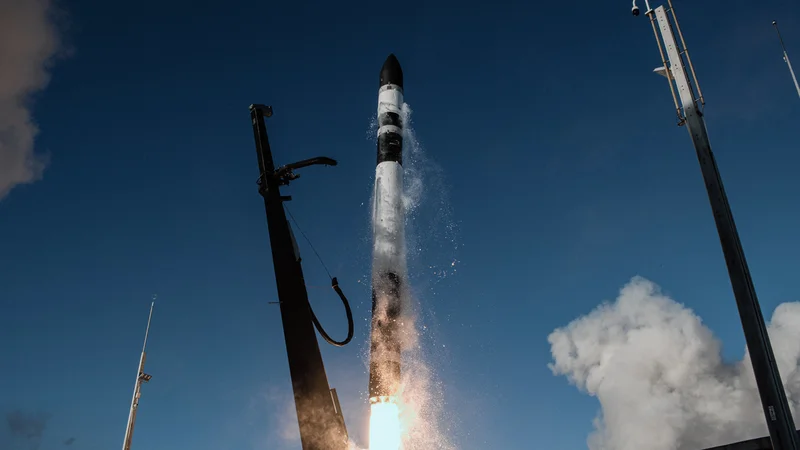
Another week, another SpaceX launch. In the pre-dawn darkness of November 1st, a Falcon 9 booster, B1091, lit up the Florida sky for the third time, carrying the Bandwagon-4 rideshare mission. For the casual observer, it was business as usual—a testament to the almost industrial cadence SpaceX has achieved. The booster landed perfectly at Landing Zone 2, its 15th and likely final touchdown at the site before its retirement. The primary payload, a South Korean reconnaissance satellite, was deployed quietly, prompting SpaceX to cut its live feed, a standard procedure for sensitive military cargo.
On the surface, it was just another delivery run on the orbital highway. The manifest was a familiar mix of government hardware, commercial imaging satellites, and university projects. But tucked away among the 18 spacecraft was a 60-kilogram box, roughly the size of a small refrigerator, that represents either the next logical step in cloud computing or a spectacular misreading of basic economics.
That box, Starcloud-1, carried an Nvidia H100 GPU. Billed by its creators as the first "data center-class GPU" in space, it’s the prototype for a radical proposition: moving the energy-guzzling heart of the AI revolution off-planet. The pitch from Starcloud, a startup backed by Nvidia’s own inception program, is undeniably seductive. They claim that space offers "unlimited, low-cost renewable energy" and that their orbital data centers can be "ten times cheaper than land-based options." The company's CEO, Philip Johnston, went even further, predicting that "In 10 years, nearly all new data centers will be being built in outer space."
This is the kind of bold, exponential claim that venture capitalists love. It taps directly into the two most potent narratives in tech today: the insatiable demand for AI computation and the growing concern over its environmental footprint. And this is the part of the report that I find genuinely puzzling. I've analyzed hundreds of pitches, and a projection of this magnitude—a complete shift of a foundational global industry within a decade—demands an extraordinary level of evidence. The numbers, as presented, don't seem to account for the one force that governs everything: gravity.
The Cost Beyond the Launchpad
Starcloud’s argument hinges on two terrestrial pain points: energy and water. They correctly identify that data centers are resource black holes. Citing a nonprofit, they note that a large facility can consume up to 5 million gallons of water a day for cooling. By moving to the vacuum of space, cooled by the void and powered by the sun, you eliminate these variables. It’s a clean, elegant solution.
But this argument conveniently ignores the brutal economics of operating in orbit. Launch cost is just the price of admission. The real operating expenses are hidden in factors the pitch glosses over: latency, maintenance, and depreciation. Sending a GPU into space to solve a power problem on Earth is like fixing a leaky faucet by moving your entire house to the Atacama Desert. You’ve addressed the initial issue (the water leak) but have introduced a cascade of far more complex and expensive logistical challenges.
Let’s start with latency. Light itself imposes a speed limit. The time it takes for a signal to travel from a user on Earth to a satellite in low Earth orbit (about 550 km up) and back is non-zero. For many high-frequency AI inference tasks, this delay is unacceptable. While certain batch-processing workloads might be feasible, the idea of running real-time services from orbit introduces a significant performance handicap. What specific market segment is this designed for, where processing can tolerate this built-in lag? The company’s public statements are silent on this.
Then there’s the issue of maintenance. A terrestrial data center has a staff of technicians. When a GPU fails—and they do—someone replaces it. In orbit, there are no service calls. The entire Starcloud-1 satellite weighs 60 kg (or about 132 pounds). If its single H100 GPU fails due to radiation damage or simple hardware fatigue, the entire asset is a loss. The replacement cost isn't just a new GPU; it's the manufacturing and launch of an entirely new satellite. How does this model scale to a full "data center" with thousands of units? What is the projected failure rate and replacement cost baked into the "ten times cheaper" calculation? Without that data, the central claim feels less like a financial projection and more like a marketing slogan.
An Equation with Missing Variables
The core of my skepticism comes down to the asset's lifecycle. An Nvidia H100 on Earth is a depreciating asset, but it operates in a controlled environment. In space, it's bombarded with radiation that degrades silicon over time. The lifespan is inherently shorter and less predictable. This isn't just a financial variable; it's a fundamental operational risk.
Starcloud’s CEO predicts that nearly all new data centers will be in orbit in a decade—to be more exact, that was his direct quote. This timeline seems wildly optimistic. It presupposes a revolution not only in launch costs but also in orbital manufacturing, servicing, and debris management. For comparison, look at India's ISRO. The day after the Bandwagon-4 launch, ISRO successfully flew its eighth LVM3 rocket, deploying its heaviest-ever communications satellite from Indian soil. It was a major milestone in a decades-long, state-funded push for sovereign launch capability. That is the real pace of progress in space: methodical, expensive, and incremental.
The Starcloud venture feels like a product of a different ecosystem entirely. It’s a moonshot fueled by a venture capital market flush with cash and a desperate hunger for the next trillion-dollar AI play. The technical demonstration of flying a GPU is impressive. But the business case appears to be an equation with too many missing variables. What is the all-in cost per compute cycle when factoring in launch, insurance, satellite depreciation, and inevitable replacement? How does that truly compare to the cost of simply building a new terrestrial data center next to a hydroelectric dam or in a colder climate?
The Bandwagon-4 mission may have been routine, but its cargo asks a profound question about our future. Are we really on the cusp of outsourcing our digital infrastructure to the heavens, or are we just watching a very expensive science experiment funded by the belief that for any problem on Earth, the solution must be up in space?
The Gravity of Economics
Ultimately, the Starcloud proposition isn’t a technology problem; it’s a math problem. The environmental narrative is compelling, but business models don't run on sentiment. They run on spreadsheets. And the spreadsheet for orbital data centers seems to have a gaping hole where the long-term operational costs should be. The physics of launch and the hostility of space impose financial penalties that solar panels and a vacuum can't simply wish away. While it's an elegant proof of concept, the claim of being ten times cheaper feels untethered from reality. The most powerful force in this equation isn't the Merlin engine or the H100 GPU; it's the unrelenting gravity of terrestrial economics. And that's a force no rocket has yet escaped.