
Article Directory
So, Jeff Bezos’s space hobby just got another seventy-eight million dollar infusion from the U.S. taxpayer. Let that sink in. The government looked at the absolute traffic jam of satellites waiting to get into orbit at Cape Canaveral and decided the best solution was to give a pile of cash to the company famous for its… leisurely pace.
I’m supposed to be impressed, I guess. The U.S. Space Force is calling it a "public-private partnership," which is just Beltway-speak for "we're subsidizing a billionaire's side project because we're terrified of having all our eggs in the Elon Musk basket." And look, I get it. The satellite processing facilities at the Cape are a genuine bottleneck. It's like having a ten-lane superhighway that narrows down to a single toll booth run by a guy who’s hand-stamping every ticket. With the explosion of SpaceX rideshare missions, where dozens of little sats are packed onto one rocket like clowns in a car, the cleanrooms are overflowing.
But is Blue Origin really the answer? Or are they just the answer with the biggest lobbying budget and the most available real estate? This contract feels less like a strategic investment in the fastest horse and more like a participation trophy for the one that’s still learning to walk. They’re getting paid to build the garage before they’ve even proven they can reliably get the car out of the driveway.
A Rocket Named ‘Never Tell Me the Odds’
Speaking of getting the car out of the driveway, let's talk about New Glenn. The beast of a rocket is finally getting ready for its second flight, ten long months after its first. The booster, which they’ve cheekily named ‘Never Tell Me the Odds,’ just rolled out to the launch pad. It’s a great name, a fun little nod to Star Wars that’s meant to project confidence and a swashbuckling spirit.
Too bad its predecessor, ‘So You’re Telling Me There’s a Chance,’ ended up as a very expensive submarine.
Let’s be brutally honest here. The first New Glenn launch was a failure where it counts most for their business model: reusability. The FAA report was clinical, pointing to the engines' inability to restart for the reentry burn. In plain English: it couldn't hit the brakes, so it smashed into the ocean. Blue Origin says they’ve made seven corrective actions. Seven. That’s a lot of things that had to go wrong. And now, they’re not just hoping to land this next one; they’re betting the farm on it. Company VP Pat Remias went on record saying if they recover this booster, they’ll slap it on the next rocket carrying their lunar lander.
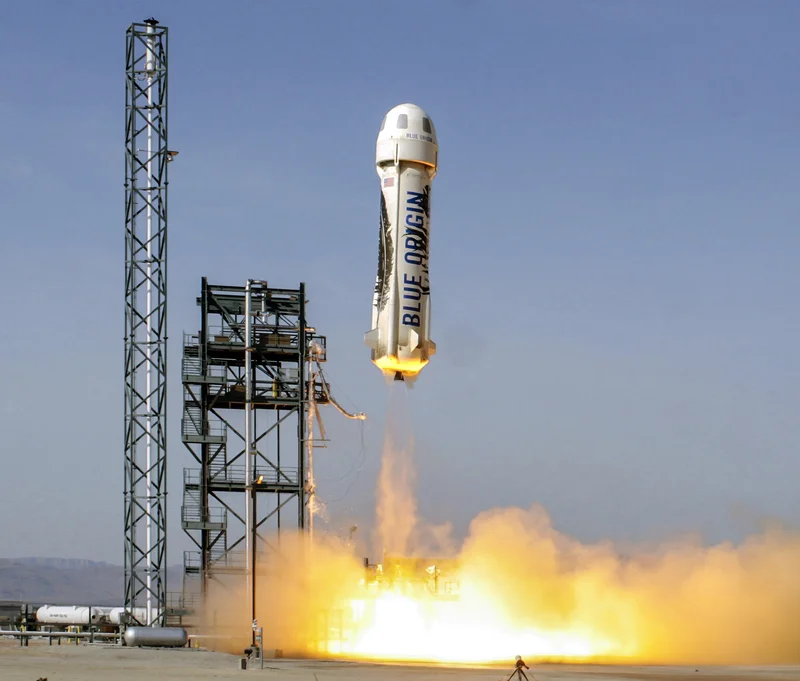
This is a bold plan. No, 'bold' doesn't cover it—this is a jaw-droppingly arrogant plan. SpaceX, the undisputed king of this game, didn’t even attempt to re-fly a booster until nearly a year and a half after their first successful landing. Blue Origin wants to do it on their second flight, coming off a total loss on their first. What is the source of this supreme confidence? Is it groundbreaking engineering we haven't seen, or is it just the kind of reality-distortion field that surrounds a trillion-dollar fortune? If this landing fails, after all this talk...
The Tortoise, the Hare, and the Taxpayer's Checkbook
This whole situation is a perfect metaphor for the modern space race. On one side, you have the frantic, chaotic, move-fast-and-break-things energy of SpaceX, launching rockets sometimes multiple times a day. On the other, you have the slow, methodical, almost painfully deliberate approach of Blue Origin. Gradatim Ferociter—"Step by Step, Ferociously"—is their motto. Lately, it’s felt more like "Step by Step, Eventually."
And now the government is stepping in to grease the wheels for the tortoise. This $78.2 million for new payload processing facilties is a big deal. It's a tangible vote of confidence from the military, essentially paying Blue Origin to expand their campus and get ready for a future that hasn't arrived yet. The official line is that this new facility will support "multiple launch vehicle providers," but let's not kid ourselves. This is about propping up Blue Origin as a viable competitor in the national security launch market, a fact underscored when the Space Force Taps Blue Origin for Payload Processing Facility.
The question nobody seems to be asking is whether they've earned it. While SpaceX was building an empire, a typical Blue Origin launch carries astronauts to edge of space for a 10-minute joyride. While Starship was exploding its way toward orbit, New Glenn was a collection of parts in a hangar. Offcourse, building giant rockets is insanely hard, and nobody should expect it to be easy. But the disparity in execution between the two companies is staggering.
So, as we watch that gleaming booster named ‘Never Tell Me the Odds’ sit on the pad, we're not just watching a rocket. We’re watching a referendum on Blue Origin’s entire philosophy. Can slow and steady actually win this race? Or is it just a way to burn through mountains of cash while pretending you’re still in the running?
So We're Just Handing Out Trophies Now?
Look, I want competition in the launch industry as much as anyone. A SpaceX monopoly would be bad for everyone. But this feels like a solution in search of a problem that Blue Origin is uniquely unqualified to solve right now. They get a massive government contract to handle a launch traffic jam they haven't contributed to, all while they're still trying to nail the basics of not crashing their primary rocket. Money can buy you land, buildings, and government contracts. It can’t buy you gravity, and it can’t buy you flight heritage. Until that booster lands safely on the deck of the Jacklyn, all of this is just expensive theater.