Article Directory
Blue Origin's Quiet Week: Three Data Points and a Divergent Strategy
This past week, the space industry’s attention was, as usual, captured by the spectacle. But the real story wasn’t in the sky; it was buried in contract announcements and contingency plans. While one company makes headlines with rapid-fire launches and explosive tests, Blue Origin just logged three seemingly disconnected events: a successful suborbital joyride, a critical government infrastructure contract, and a quiet promotion to NASA’s potential moon mission savior.
Viewed in isolation, each is a minor news item. A tourism flight is now routine. An infrastructure contract is mundane. A backup plan is, by definition, not the main event. But taken together, these data points paint a clear picture of a corporate strategy that is methodical, diversified, and fundamentally different from its primary competitor. Blue Origin isn’t just building rockets. It’s building a moat.
The Unsexy Foundation of Infrastructure
Let’s start with the least glamorous—and perhaps most telling—development: the news that Blue Origin wins $78.2 million contract to expand satellite processing infrastructure at Cape Canaveral. This isn’t for a futuristic rocket or a lunar lander. It’s for something far more prosaic: expanding satellite processing facilities at Cape Canaveral. Essentially, it's a contract to build more garage space at the world's busiest spaceport.
The problem is a classic bottleneck. Imagine O'Hare airport with plenty of runways but only a handful of gates. That’s the Cape right now. Launch pads can handle more traffic, but the specialized cleanrooms where satellites are fueled, tested, and prepped are at capacity. The rise of SpaceX's rideshare missions, packing dozens of small satellites onto a single rocket, has exacerbated the issue exponentially. Each tiny payload requires its own security, its own handling, its own corner of the cleanroom. You can almost picture the scene: technicians in white bunny suits navigating a logjam of multi-million-dollar hardware, a traffic jam of immense strategic importance.
This contract, secured through a Commercial Solutions Opening (a procurement method designed to attract private capital and share risk), is significant for two reasons. First, it positions Blue Origin not just as a launch provider, but as a landlord and a core infrastructure partner to the entire space ecosystem. While others are focused on the vehicles, Bezos’s company is building the toll road. Second, it’s a public-private cost-sharing agreement. The government isn’t just buying a service; it’s co-investing in Blue Origin’s ground capabilities. What does it say about the state of American launch capacity when the Department of Defense feels compelled to subsidize the construction of payload processing facilities? Is this a vote of confidence in Blue Origin, or an admission of a systemic vulnerability?
The Strategic Lifeline to the Moon
The second data point is the quiet revelation that NASA Could Use Blue Origin's Lander for Artemis III if Starship Fails. The official plan, of course, relies on SpaceX’s Starship—a vehicle of unprecedented scale and complexity. But there’s palpable anxiety inside the agency that Starship won’t be ready for a 2027 or even 2028 crewed landing.
The technical hurdles for Starship are immense, particularly the need for in-orbit refueling. Some estimates suggest as many as 20 orbital flights might be needed to fuel a single lunar mission—to be more exact, the number is highly theoretical and depends on final vehicle mass and engine efficiency, but the logistical complexity is staggering. It introduces dozens of potential points of failure before the mission to the Moon even begins.

Enter Blue Origin’s more conventional, less ambitious lander. The Mark 1 wouldn't require refueling and, according to sources, could be human-rated and ready before the end of 2028. This is the crucial part of the equation: it could allow NASA to land astronauts on the Moon before China, which is targeting a 2029 launch. I've analyzed hundreds of government contingency plans, and this one feels different. It's not just a backup; it's an implicit acknowledgment from NASA that its primary, high-risk strategy is on shaky ground. This is risk management bleeding into strategic redirection.
This potential partnership transforms Blue Origin from a secondary player into a critical hedge for America’s geopolitical ambitions in space. It’s the ultimate leverage. If Starship succeeds, NASA looks brilliant. If it falters, NASA has an understudy ready in the wings, and Blue Origin gets to land on the Moon. This is less like a space race and more like a fund manager buying a put option to protect against a catastrophic failure in their star holding. Who is that option being bought from? Jeff Bezos.
The Sideshow That Pays the Bills
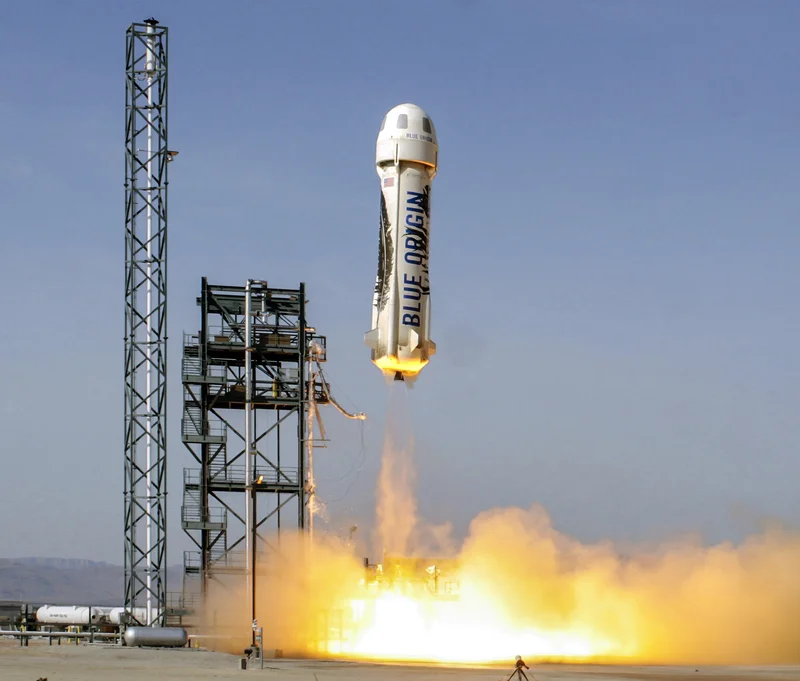
Finally, there was the launch of NS-36, the 15th space tourism mission carrying six passengers on a 10-minute trip to the edge of space. In the grand scheme of things, this is a sideshow. The New Shepard program is a technological dead-end for orbital ambitions. But it’s a mistake to dismiss it.
First, it’s a functioning, repeatable, and presumably profitable business line. While Blue Origin has never disclosed ticket prices, the cash flow from these flights helps fund the far more expensive development of the New Glenn rocket and the Blue Moon lander. Second, with 36 total flights of the vehicle, it provides an invaluable stream of operational data on vehicle reusability, turnaround times, and subsystem reliability.
While the world watches Starship prototypes explode in spectacular fireballs—providing invaluable data, to be sure—Blue Origin is quietly perfecting the less dramatic, but commercially vital, art of routine launch operations. The tourism flights are the company’s equivalent of a high-margin software product that funds its moonshot R&D. It's a pragmatic, if unexciting, piece of the larger portfolio.
A Portfolio, Not a Rocket
When you plot these three data points on a chart, the trend line is clear. Blue Origin is not playing the same game as SpaceX. Musk is pursuing a venture capital model: a singular, massive bet on a revolutionary technology that will either change the world or fail spectacularly. Bezos, true to his Amazon roots, is playing a portfolio game.
He’s building a diversified aerospace conglomerate. He has the stable, government-backed revenue from infrastructure contracts (the AWS of his space venture). He has the high-margin, cash-generating niche business in space tourism (the Amazon Marketplace). And he has the high-risk, high-reward bets on New Glenn and the lunar lander (the Alexa or Prime Video).
One strategy generates breathless headlines and fervent acolytes. The other generates contracts, contingency plans, and a steadily expanding physical and political footprint. The public may be watching a hare, but the tortoise is quietly buying up the real estate under the racetrack.