
Article Directory
So, a giant ball of fire explodes into the sky over Los Angeles, looking for all the world like the opening scene of a disaster movie. People think they’ve been nuked. Windows shake. The horizon glows a sick, neon orange. And by the next morning, the official story is… everything’s fine, folks. Move along, nothing to see here.
Give me a break.
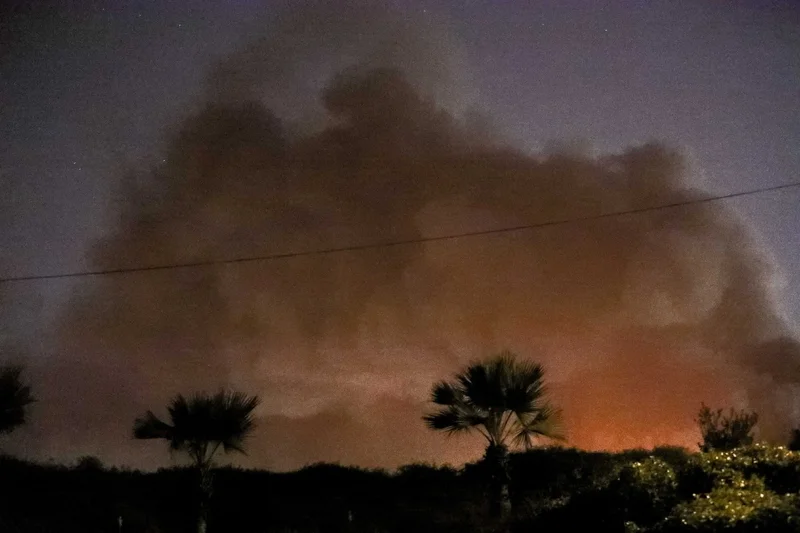
This wasn't some minor hiccup. This was the Chevron refinery in El Segundo—a sprawling beast of pipes and tanks that supplies 20% of California's gas—deciding to put on an impromptu pyrotechnics show. For 30 minutes, it roared like a dragon, a 300-foot-tall reminder of the industrial monster sleeping next to a bunch of million-dollar beach houses. The public reaction was one of shock, captured in headlines like ‘I thought we got nuked or something.’ Massive explosion, fire at Chevron refinery rocks El Segundo.
Then, just as quickly, the PR machine whirred to life, faster than the fire crews. Chevron called it an "isolated fire." Officials assured everyone there was "no threat to the public." The company proudly announced that "all refinery personnel and contractors have been accounted for and there are no injuries."
It’s a beautiful, clean narrative. A little too clean, don't you think? It’s the kind of story a company tells when it’s desperately trying to get ahead of the lawyers.
The Official Story is a Little Too Clean
Let’s talk about that "no injuries" claim for a second. It was the headline on every statement Chevron pushed out. A massive explosion at a hydrocracking unit, a fire visible for miles, and not a single person got so much as a scratch. Miraculous, right?
Except, a lawsuit was filed the very next day. An employee claims he was injured and that the whole thing was a "preventable disaster" caused by cutting corners. Now, I’m no legal expert, but that doesn't exactly square with the "nobody was hurt" line being fed to the public. So, what's the real story here? Is the lawsuit baseless, or was the corporate statement just a lie designed to calm the markets and the public until the stock market opened?
This is the classic corporate playbook. Control the narrative, minimize the damage, and treat the public like they’re too stupid to ask questions. They expect us to believe that an event that had people grabbing their dogs and fleeing in their cars was just a minor operational issue. It's a bad joke. No, 'bad' doesn't cover it—this is a five-alarm dumpster fire of corporate spin.
And while the company was busy patting itself on the back, what about the stuff we were all breathing?
Breathe Deep, It's Only 'Volatile Organic Compounds'
Chevron was quick to point out that its fence-line air monitors showed no "exceedances." Sounds great, right? It’s a nice, technical-sounding word that means nothing to the average person. But the South Coast Air Quality Management District, the actual agency in charge of this stuff, told a slightly different story.
They detected "elevated levels of volatile organic compounds." That’s the fancy term for a chemical cocktail that can include fun ingredients like benzene and formaldehyde—you know, the stuff that gives you cancer. Officials tried to soothe everyone by saying the plume went high up into the atmosphere. Oh, good. So instead of poisoning one neighborhood, the toxins got a nice, even distribution across a wider area. Thanks for clearing that up.
This whole setup is like living next to a roommate who’s really into amateur chemistry. Most days, it’s fine, but every once in a while, the apartment fills with a weird smell, your eyes start watering, and he just yells from his room, "Don't worry, I've got it contained!" You don't know what he's cooking up, but you have a sinking feeling it ain't good for you. The residents of El Segundo and Manhattan Beach have been living with that feeling for decades. They talk about weird rubber smells, headaches, and dizziness. And offcourse, after a giant fireball, they’re just told to close their windows and hope for the best. As one report put it: El Segundo was born by oil. The massive refinery fire leaves residents rattled.
Are we really supposed to be okay with this? This recurring cycle of industrial mishap, vague reassurances, and a lingering chemical odor? Then again, maybe I'm the crazy one for thinking a pillar of fire over a major city is something to be concerned about.
The Real Price at the Pump is Your Peace of Mind
Ultimately, the only thing that seems to get anyone's attention is the money. The immediate question wasn't "Is our air safe?" but "How much is this going to screw up gas prices?" Experts are already predicting a spike of 13 cents a week for every week the refinery is offline. Suddenly, politicians are paying attention.
This is the rotten deal we’ve made. We’ve become so dependent on these aging, fire-prone facilities that we tolerate them as a necessary evil. California is home to a shrinking number of refineries, and this one is the second-largest in the state. If it goes down, the whole system teeters. We’re basically held hostage, forced to accept the risk of explosions and toxic plumes because the alternative is a massive fuel shortage and economic chaos.
This wasn't the first fire at this refinery, and it won't be the last. There was one in 2022. Another in 2017. Go back to 2015, and you get the massive explosion at the Torrance refinery that nearly caused a catastrophic release of hydrofluoric acid. These aren't isolated incidents; they're the predictable outcome of running century-old industrial equipment in the middle of a densely populated area.
They'll investigate, find a cause, levy a fine that amounts to a rounding error for a company like Chevron, and promise it will never happen again. And we're just supposed to move on, until the next time the sky turns orange…
Just Another Thursday in Corporate America
Let's be real. The fire was out by Friday morning, but the actual problem is still burning. The real story isn't the explosion; it's the casual, almost bored acceptance of it. A fireball erupts, shakes the city, and by the next day, people are walking their dogs and grabbing coffee in its shadow. That's not resilience. That's resignation. We've been conditioned to accept that this is the price of modern life—that the corporate giants we depend on will occasionally belch fire and poison, and our only job is to shut the window and wait for the all-clear. The most toxic thing released that night wasn't in the plume of smoke; it was the story that everything was under control.