
Article Directory
The Quiet Filing That Signals a Financial Revolution
It started with a piece of news that most people would scroll right past. A regulatory filing. Stripe’s stablecoin unit, Bridge, has applied to the U.S. Office of the Comptroller of the Currency for a national bank trust charter. On the surface, it’s a mouthful of bureaucratic jargon. But I need you to understand: this isn't just paperwork. This is one of the most significant tremors I’ve felt in the tech landscape in years—a sign that the tectonic plates of finance are shifting beneath our feet.
What we’re witnessing is the beginning of the great convergence. For years, the worlds of traditional finance and the nascent digital economy have circled each other like wary prize fighters. One, the established champion, built on centuries of trust and regulation. The other, the disruptive challenger, built on code and decentralized ideals. We were told you had to pick a side. That one would inevitably destroy the other.
They were wrong.
What Stripe is doing with this charter application is monumental. They aren't trying to burn the old system down; they’re building a bridge—and yes, the name is just perfect—directly into its heart. They are asking for the highest seal of approval from the legacy world. This is a charter from the Office of the Comptroller of the Currency—in simpler terms, it's the official blessing from one of the most powerful banking regulators on the planet. It’s a move to make digital dollars as trusted, as regulated, and as fundamentally boring as the paper dollars in our wallets. And that’s precisely why it’s so revolutionary.
Think about the invention of the printing press. Its true power wasn't just in printing radical new pamphlets; it was when it started printing the Bible, taking the most established text in the Western world and making it accessible to everyone. This is that moment for finance. By seeking a federal charter under the new GENIUS Act, Stripe, along with pioneers like Circle and Paxos, is taking the radical technology of the blockchain and integrating it with the most established institution we have: the national banking system. They’re preparing to print a new kind of money.
From Abstract Code to Your Netflix Bill
So, what does this actually mean for you and me? For the longest time, "stablecoins" have felt like a niche concept, something for crypto traders and DeFi enthusiasts. But this is where the theory smashes into reality. Just as this news broke, it was announced that Stripe pilots stablecoin payments for subscriptions.
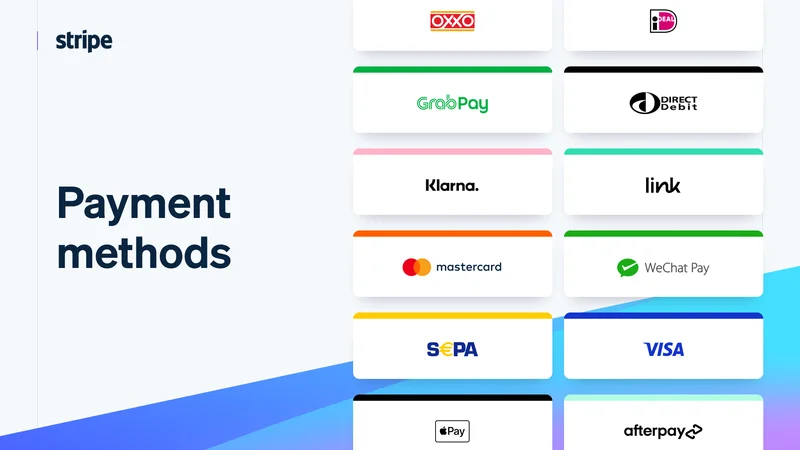
When I first saw that, I honestly just sat back in my chair, speechless. This is the kind of breakthrough that reminds me why I got into this field in the first place. Subscriptions are the lifeblood of the modern internet economy. They are predictable, recurring, and global. And they are currently powered by a payment infrastructure that is, frankly, decades old. Credit card networks, with their multi-day settlement times, interchange fees, and regional limitations, are the horse-and-buggy system of the digital age.
Now, imagine a world where a software developer in Estonia, a musician in Brazil, or a writer in Nigeria can offer a subscription to a global audience, and the payments don’t just clear instantly, they settle instantly—that’s the future this single regulatory filing is helping to build, a future where value moves as freely and as quickly as information, without a dozen intermediaries each taking a slice. It’s a paradigm shift hidden in plain sight.
This isn't just about efficiency; it's about empowerment. We're talking about a financial system where money is programmable. A subscription isn't just a recurring charge; it could be a smart contract that automatically adjusts, splits, or forwards payments based on pre-set conditions. This charter is the key that unlocks the door to that future on a massive, federally-regulated scale.
Of course, with this incredible power comes an immense responsibility. When you’re moving from a niche technology to the core infrastructure that people will rely on for their livelihoods, the stakes are infinitely higher. The security, the transparency, the absolute guarantee that a digital dollar is always worth a dollar—these become sacred duties. This is no longer just about elegant code; it's about public trust.
But the excitement is palpable. You can feel it in the air. I was struck by a comment from a representative for a decentralized exchange aggregator, Astros, who noted that a federally chartered stablecoin bank will "set a precedent for interoperability between on-chain liquidity and off-chain oversight." That’s not the language of a niche industry anymore. That’s the sound of two worlds learning to speak the same language, creating a system that is both innovative and safe, decentralized and accountable. It’s the best of both worlds, converging at last.
The Plumbing for a New Economy
Let’s be perfectly clear. This move by Stripe isn't an experiment. It's a declaration. It’s the moment a multi-trillion-dollar fintech giant plants its flag and says, "This is the future of money, and we're going to build it." The application for a national trust charter is the foundational act—it’s like laying the first pipes for the plumbing of an entirely new kind of global economy. For years, we've talked about the potential of programmable money and instant, global value transfer. Now, we're watching them pour the concrete. This is the bedrock upon which the next generation of the internet will be built.