
Article Directory
So, China is playing hardball with rare-earth metals again. Color me surprised. You could practically hear the collective gulp from every corner of the Pentagon to Silicon Valley when Beijing announced it was tightening the screws on exporting the stuff that makes our modern world go 'round.
The official line is, offcourse, a masterclass in bureaucratic doublespeak. A spokesperson from the Chinese Ministry of Commerce, probably standing in a sterile, beige room under fluorescent lights, droned on about "national security interests" and preventing these materials from being used for "sensitive applications." Give me a break. This isn't about some rogue state trying to build a super-weapon with a handful of europium. This is a calculated, cold-blooded power play, timed perfectly to stick a thumb in Donald Trump's eye just weeks before they're supposed to sit down for another round of trade talks.
Let's call it what it is: economic hostage-taking. China isn't just building a wall; they're twisting the faucet on the main water line to the entire Western tech ecosystem. They're not shutting it off completely—not yet. They're just letting everyone know, with a smug little grin, that they can turn our digital paradise into a desert whenever they damn well please. And we're all just supposed to nod along and pretend this is normal international diplomacy?
Welcome to the Choke Point
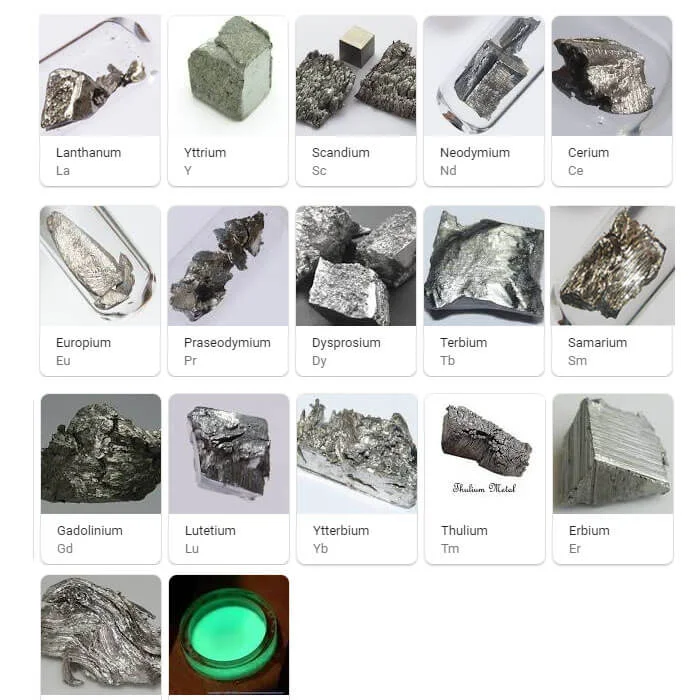
This isn't some minor tweak to the rulebook. China has now slapped export controls on 12 of the 17 rare-earth metals. We're talking about the secret sauce in everything from F-35 fighter jets and Tomahawk missiles to your shiny new EV and the camera lens on your phone. Holmium, erbium, dysprosium... they sound like characters from a bad fantasy novel, but they're the elements that define the 21st century. And China processes about 90 percent of them. China tightens export controls on rare-earth metals: Why this matters.
This is a bad situation. No, "bad" doesn't cover it—this is a five-alarm strategic blunder decades in the making. We outsourced our entire critical mineral supply chain for the sake of cheap gadgets and quarterly profits, and now the bill is coming due. The US government says it sourced 70 percent of its rare earths directly from China over the last few years. Seventy percent. That ain't a supply chain; that's a leash.
Now, foreign companies wanting to buy this stuff need to get "special approvals" from Beijing and explain the "intended use" of the product. Can you picture it? Some Raytheon executive filling out a form in triplicate, explaining that the terbium is for, you know, "advanced guidance systems," and hoping some party official in a stuffy office stamps it "APPROVED"? What a joke. What are they gonna do, lie? And what happens when Beijing just says no?
It's the sheer hypocrisy that gets me. The US has spent the last few years righteously restricting China's access to our advanced semiconductors, citing—you guessed it—national security. We were worried they'd reverse-engineer our tech and get a military edge. Now China's doing the exact same thing with the raw materials we need to build that tech in the first place, and they're using our own playbook as justification. It's almost beautiful in its cynical perfection.
A Clock, a Calendar, and a Bluff
The timing here is everything. The Commerce Ministry made it clear that most of these restrictions don't actually kick in until December 1st. That leaves just enough time for Trump's big meeting with Xi Jinping. It's a negotiation tactic pulled straight from a mob movie: "Nice defense industry you've got there. Be a shame if something... happened to its supply of essential minerals."
This puts the US in an absolutely miserable position. The defense industrial base is already stretched thin, according to analysts who actually track this stuff. We can't produce this stuff at scale, not yet anyway. So does Trump call their bluff? Does he offer concessions on tariffs or tech restrictions to keep the rare earths flowing? Or does he double down and accelerate the onshoring of refining capabilities, a process that will take years and cost a fortune?
Honestly, I don't think anyone in Washington has a real answer. They've been talking about this vulnerability for over a decade, and what's really been done? A few pilot programs, some government grants, a lot of hand-wringing... It’s all just noise. We’re addicted to a globalized system that works great until someone decides to weaponize it. Then we act all shocked when the supply chain we happily ignored for 30 years suddenly becomes a tool of geopolitical coercion.
And maybe I’m the crazy one here, but isn't it insane that the entire global balance of power can be tilted by who controls a few specific types of metallic dirt? We build these incredible machines capable of thinking and fighting and connecting the globe, and it all depends on a handful of mines and refineries on the other side of the world controlled by our chief geopolitical rival. The whole system is a house of cards, and Beijing just announced it's thinking about turning on a fan.
The Leash Just Got Shorter
Let's stop pretending. This isn't about "compliant trade" or "global stability," as the Chinese spokesperson claimed. That's the kind of bland, insulting PR you feed to people you think are idiots. This is about leverage. It's about control. It’s China looking the United States dead in the eye and saying, "Everything you build, you build with our permission." They just reminded the world who owns the foundational elements of modern technology, and we're all just living in it. For now.