
Article Directory
Occidental's $9.7 Billion Fire Sale: A Masterclass in Corporate Jargon
The announcement came through with the expected corporate polish. Berkshire Hathaway, the ever-watchful leviathan of Omaha, has agreed to acquire Occidental Petroleum’s chemical division, OxyChem, for $9.7 billion in an all-cash transaction. On the surface, it’s a clean, sizable deal—one of the largest in the U.S. petrochemical sector in recent years. Occidental gets a cash infusion, and Berkshire adds another stable, cash-generating asset to its vast portfolio.
In the press release, the language was predictably triumphant. Vicki Hollub, Occidental’s President and CEO, framed the divestment not as a sale, but as a launchpad. This transaction, she stated, “catalyzes a significant resource opportunity” and will “unlock 20+ years of low-cost resource runway.” It’s a narrative of forward-looking strategy, of proactive positioning to deliver “meaningful near and long-term value.”
But when you strip away the varnish of strategic communications, the numbers tell a different story. It’s a story less about unlocking the future and more about servicing the debts of the recent past. Of the $9.7 billion in proceeds, Occidental has earmarked a very specific $6.5 billion for a single purpose: debt reduction. The stated goal is to push the company’s principal obligations below the $15 billion mark. This isn’t a discretionary allocation; it’s a balance sheet necessity, a direct consequence of Occidental’s late-2023 acquisition of CrownRock.
This is the core discrepancy. The narrative is one of strategic foresight, but the cash flow is one of financial triage.
The Narrative vs. The Numbers: What the Final Price Reveals
The Signal in the Noise
My analysis of M&A transactions always starts with the gap between the initial asking price and the final sale price. This delta is often more revealing than any CEO quote. Initial reports, when Occidental was first shopping the unit, suggested the company was seeking a price of “at least $10 billion.” The final agreement with Berkshire landed at $9.7 billion.
A $300 million shortfall may seem minor in a multi-billion dollar deal, but it is not insignificant. It represents a discount of about 3%—to be more exact, 2.97%—from that initial $10 billion floor. In a negotiation for a high-quality, profitable asset like OxyChem, this suggests the seller had less leverage than the buyer. A company selling from a position of pure strategic strength rarely accepts a bid below its publicly floated minimum. A company that needs to deleverage its balance sheet, however, has less room to negotiate. Berkshire Hathaway, with its fortress of cash, is famously patient. It doesn't overpay. The final price tag indicates they found a motivated seller.
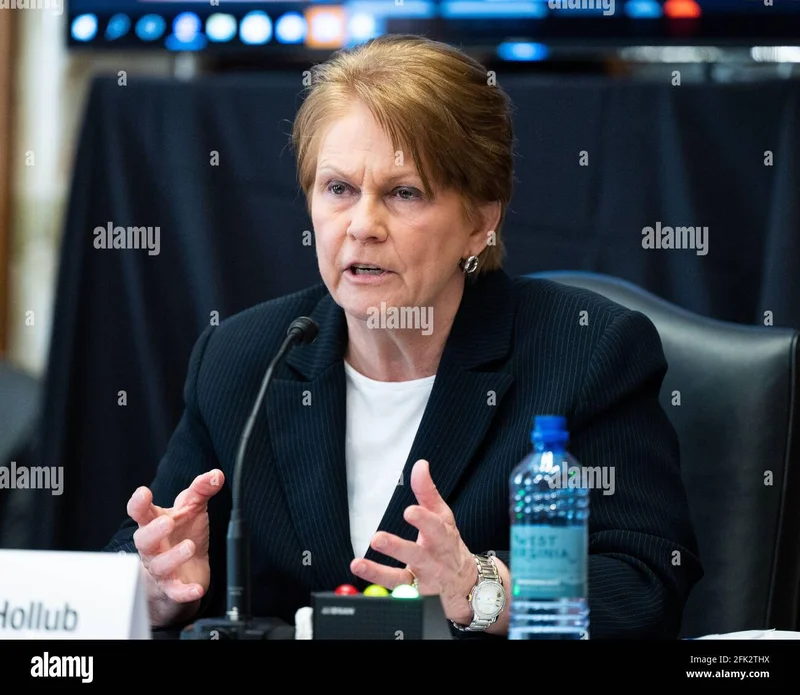
And this is the part of the analysis that I find genuinely telling. The distance between the language of “strategic opportunity” and the simple arithmetic of debt reduction is where corporate narrative is manufactured. Greg Abel, Berkshire’s Vice Chairman, played his part perfectly, commending Hollub and her team for their “commitment to Occidental’s long-term financial stability.” It’s a polite, almost clinical acknowledgment of the real situation: this sale is about stability, not a strategic renaissance. It’s a necessary move to shore up the foundation after taking on the risk of the CrownRock deal.
The transaction is, in fact, an echo of Berkshire’s past maneuvers. It is their largest acquisition since the purchase of Alleghany Corp. (a $13.7 billion transaction in 2022), another case of acquiring a solid business without entering a frothy bidding war. They are buying a well-run, safely operated business with a strong team, and Occidental is retaining the legacy environmental liabilities. It’s a clean extraction of a valuable asset for Berkshire, and a critical injection of liquidity for Occidental.
A "Strategic Catalyst" or a Balance Sheet Necessity?
The Long View vs. The Quarterly Report
This preference for narrative control over stark financial reporting is consistent with other public statements. In a prior interview, CEO Vicki Hollub expressed a desire to do away with quarterly SEC financial reporting, noting that “sometimes it’s difficult for us to be able to share with our shareholders and our potential investors the complete” picture in such a short timeframe.
This perspective is central to understanding the OxyChem sale announcement. If a three-month window is too short to convey a “complete” picture, then a single press release must feel profoundly inadequate. The response is to fill that space with decade-spanning projections—like the “20+ years of low-cost resource runway”—that are impossible to audit and rely entirely on faith in management’s long-term vision. It shifts the conversation away from the current, verifiable numbers (debt-to-equity ratios, interest coverage) and toward a hazy, optimistic future.
There is nothing inherently wrong with this. A CEO’s job is to sell a long-term vision. But an analyst’s job is to read the fine print. And the fine print here is clear: Occidental sold a prized asset for slightly less than its target price to service a large debt load incurred from a recent acquisition. It is a logical, perhaps even prudent, financial decision. But framing it as a “catalyst” that “unlocks” a new era feels like an exercise in jargon designed to obscure a straightforward, and less glamorous, reality. The reality is that the balance sheet demanded it.
The Debt Service Ratio
This wasn't a strategic masterstroke. It was a deleveraging event, wrapped in the language of one. Occidental had a problem—a large debt obligation following a major acquisition—and it found a solution by selling one of its most reliable assets. Berkshire Hathaway, as is its custom, was there to provide the solution in exchange for a quality business at a fair price. The intricate narrative of unlocking decades of future value is simply the story you tell when the real story is that the bill came due.
Reference article source: