
Article Directory
You’re supposed to go outside tonight.
Some local news station, KWTX I think, is telling everyone in Central Texas to crane their necks to the sky between 7:55 and 8:01 PM. You’ll see a bright dot, moving way faster than any plane, silently carving a perfect arc from the northwest to the southeast. It won’t blink. It’ll just glide, a silent, brilliant visitor.
That’s the International Space Station.
And for a few minutes, it’s easy to get swept up in the romance of it. The sheer idea of it. Humanity’s outpost in the heavens. A testament to science and international cooperation, a shining beacon of what we can achieve. It’s moving at 17,500 miles per hour, a speed my brain can’t really process, with people living inside it. Offcourse, it’s amazing.
Then you snap out of it. You come inside, you open your laptop, and you remember what the International Space Station actually is in 2025: a magnificent, crumbling, politically-compromised relic that we’re about to ceremoniously crash into the ocean.
Celebrating 25 Years of Going in Circles
A Springboard to Where, Exactly?
I just read a NASA press release that almost made me spit out my coffee. It’s celebrating 25 years of "continuous human presence" on the ISS. It’s filled with glorious phrases like "springboarded humanity forward" and "leading us back to the Moon, Mars, and beyond."
Give me a break.
For 25 years, we’ve been mastering how to live in a can 250 miles up. We’ve learned how to drink water without it floating away, how to not lose all our bone density, and how to grow chile peppers in a box. Groundbreaking stuff, I’m sure. NASA astronauts are up there demonstrating how gravity works—or doesn’t. They’re running experiments on how concrete hardens and sequencing DNA. They’ve even managed to 3D print a metal part.
This is all very impressive, I guess. It’s the kind of science fair project you’d expect from an organization with a budget bigger than the GDP of a small country. But let’s be real about what the international space station is used for. It’s a laboratory. A very, very expensive laboratory that has been circling the same patch of cosmic real estate since the year 2000. It ain't a springboard; it’s a treadmill.
They talk about creating "self sufficiency in space." They proudly announce they’ve achieved 98% water recovery. Fantastic. We’re getting really, really good at living in a hermetically sealed tube. But for a journey to Mars? This isn’t a step, it’s a stutter-step. We’ve spent a quarter of a century proving we can survive in our own backyard before taking a single step into the wilderness.
A High-Orbit Marvel Held Hostage by a Rusting Partner
The Leaky, Creaky Reality
While NASA’s PR department is busy writing poetry about exploring the cosmos, the station itself is, well, showing its age.
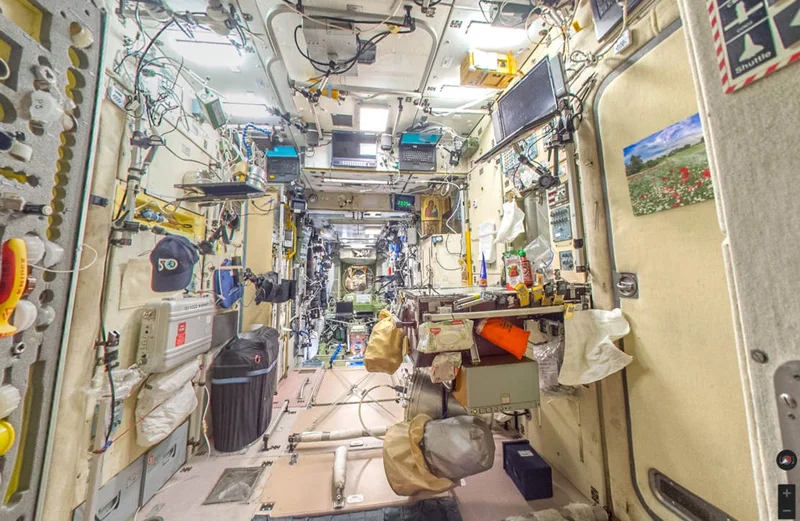
It’s a miracle of engineering, sure, but it’s also an almost 30-year-old piece of hardware that’s been constantly exposed to vacuum, radiation, and extreme temperatures. Things are breaking. Just the other day, they had to abort a reboost attempt using a SpaceX Dragon because the fuel tanks didn’t swap correctly. They got it working eventually, but it’s a reminder that this thing is held together by constant, painstaking maintenance.
And then there’s the Russian situation.
We’re supposed to be this grand international partnership, a symbol of post-Cold War harmony. But the reality is a deeply dysfunctional codependency. The Russian segment has been leaking air. It’s old. Yet we can’t just cut it loose. Why? Because the station’s main computers—the ones that handle critical things like, you know, attitude control—are sitting in the Russian Zvezda module.
This is a bad plan. No, 'bad' doesn't cover it—this is a five-alarm dumpster fire of strategic planning. We’re talking about leading humanity to Mars while being unable to steer our own flagship without systems located in a segment run by a country we’re in a proxy war with. It's like trying to drive across the country but your steering wheel is in your neighbor’s car, and you two aren't on speaking terms. It reminds me of trying to get my HOA to approve a new fence. Endless bureaucracy, weird dependencies, and nobody seems to be in charge of the actual mission…
So when you see that beautiful, serene light gliding across the sky, remember what it really is: a marvel of engineering duct-taped to a political nightmare.
Handing Over the Keys to Low-Earth Orbit
The Billion-Dollar Burial at Sea
So what’s the grand finale for humanity’s greatest achievement in space? A heroic mission to the outer planets? Being turned into a permanent museum?
Nope. We’re going to crash it into the Pacific Ocean.
In 2030, the plan is to deorbit the ISS and have it burn up over a remote area of the ocean known as Point Nemo, the spacecraft cemetery. And who has NASA picked for the solemn job of acting as the station’s undertaker? SpaceX, of course. They’re going to build a custom vehicle to drive this $150 billion monument into the drink.
Meanwhile, NASA is hedging its bets on the future by throwing a few hundred million dollars at private companies to see if they can cobble together some commercial space stations before 2030. It’s a race against time, and we’re not even guaranteed to win.
If we don’t get a replacement up in time, that 25-year streak of "continuous human presence" just… ends. The title for the longest continually inhabited space station will pass to China and their Tiangong station, which has been quietly orbiting up there for years. We spent a generation building the undisputed king of low-Earth orbit, and we’re going to end the era by handing the crown to our biggest rival without a fight.
Then again, maybe I’m the crazy one here. Maybe this is all just the natural lifecycle of technology. It was built, it served its purpose—whatever that was—and now it’s time to move on. It produced over 4,400 research publications. It helped develop cancer-fighting drugs and better optical fibers. Those are real, tangible benefits.
But when I look up at that light tonight, I won’t see a springboard. I’ll see a ghost. A beautiful, brilliant, impossibly expensive ghost of a future we were promised but never quite reached.
It's a Dead End with a Great View
Let’s just call it what it is. The ISS was a monumental achievement in keeping astronauts busy. We spent decades and a fortune to prove we could run on a treadmill in a vacuum. Now we're paying someone to throw the treadmill in the ocean while we talk about the marathon we're definitely going to run someday. Look up and enjoy the show. It’s the most expensive shooting star you’ll ever see.
Reference article source: