
Article Directory
The goal of NASA’s X-59 program is ostensibly to build an aircraft that flies faster than sound without the window-shattering sonic boom. That’s the public narrative, the one that makes for good headlines. But after reviewing the engineering pre-flight protocols, it’s clear the primary product of the X-59 isn’t a quiet “thump”—it’s data. Mountains of it. The aircraft itself is almost secondary; it’s a high-performance vessel designed to test a single, critical hypothesis: can we quantify and mitigate the risk of novel supersonic flight to a degree that satisfies not just engineers, but regulators and the public?
Before this $247.5 million experiment ever leaves the ground, its digital twin has already been flying for months. The entire program is an exercise in front-loading risk assessment. They aren’t just building a plane; they’re building a safety case so robust that the actual first flight feels more like a confirmation of existing data than a leap into the unknown. The core challenge here isn't one of aerodynamics. It's a problem of information management.
The Telemetry Is the Mission
The nervous system of the X-59 is its Flight Test Instrumentation System, or FTIS. And this is the part of the program that I find genuinely compelling. According to NASA’s own instrumentation engineer, the system records 60 streams of data, capturing over 20,000 unique parameters. Before the engines even spool up for takeoff, the FTIS has already been running for more than 200 days, generating over 8,000 files of ground-test data.
This is less like a traditional flight test and more like running a high-frequency trading algorithm. The FTIS isn't just a flight recorder for post-mortem analysis; it's a real-time risk ledger. Every sensor, every actuator, every line of code is being monitored not just for function, but for deviation. The goal is to create a dataset so granular that any potential failure can be modeled and predicted before it ever occurs in the air. The aircraft itself is just the physical manifestation of a massive statistical model.
But here’s the question the briefing materials don’t answer: what is the acceptable threshold for variance in those 20,000 parameters? It’s one thing to collect data, but it’s another to define the tripwires. At what point does a fractional pressure change or a microsecond lag in a control surface response move from an acceptable anomaly to a no-go signal? Without knowing the tolerance bands, the raw numbers are just noise.
Redundancy as a Diversified Portfolio
Beyond the data, the X-59’s physical architecture is built on the principle of systemic redundancy. It's a risk mitigation strategy any portfolio manager would recognize. The digital fly-by-wire system, which translates pilot inputs into flight surface movements, doesn’t rely on a single computer. It uses multiple, with automatic failover. The electrical and hydraulic systems have independent backups. This is diversification applied to engineering: a single-point failure in one system shouldn't trigger a cascading collapse across the entire portfolio of operations.
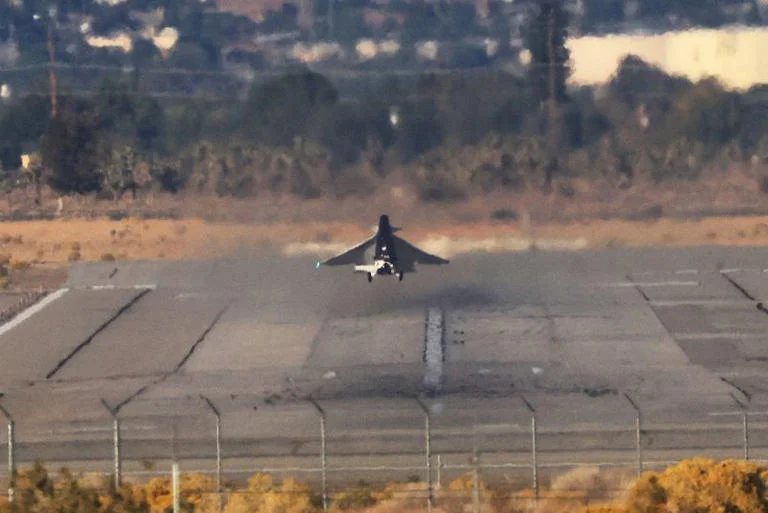
The most visceral example of this is the engine restart system. In the event of a flameout, the pilot has a backup that uses hydrazine (a highly toxic and reactive chemical) to force a restart. I can just picture the scene during the safety check at Plant 42: technicians in full protective gear, moving with deliberate precision around an aircraft that looks like it flew out of science fiction, handling a substance so dangerous it feels like an artifact from a cruder era of rocketry. It’s a stark reminder that for all the sophisticated data modeling, sometimes the fail-safe is brutally analog.
The plane is designed to cruise at an altitude of 55,000 feet—to be more exact, it's designed for sustained flight operations at that altitude, which presents unique life-support challenges. Even the pilot's life support and ejection seat are proven systems, adapted from the T-38 trainer. They’ve isolated the experimental components of the aircraft and surrounded them with a cocoon of established, reliable technology. The question, however, remains: how truly independent are these redundant systems? Have they modeled for a single causal event—say, a specific type of electrical surge or a severe structural vibration—that could simultaneously degrade the primary and backup systems? Correlation risk is the silent killer of any diversified strategy.
The Final Qualitative Check
For all the terabytes of data and layers of redundant hardware, the final decision to fly rests on a variable that can’t be quantified: human trust. As described in NASA’s X-59 Moves Toward First Flight at Speed of Safety, lead test pilot Nils Larson’s comment about shaking his crew chief’s hand is telling. "It's not your airplane – it's the crew chief's airplane – and they're trusting you with it," he says. This is the qualitative overlay on the quantitative analysis. After all the numbers are run, a human has to look another human in the eye and give the nod.
Larson’s confidence is the output of the entire safety process. He trusts the engineers, the designers, and the maintainers who have touched every inch of the aircraft. His willingness to strap into the cockpit is the ultimate validation of their work. If the data showed a flaw, or if the crew chief had a flicker of doubt, that trust would evaporate.
But this raises a fascinating point about risk management. How does an organization like NASA factor this "trust metric" into its official go/no-go decision? It's the most critical data point of all, yet it will never appear on any of the 60 data streams. It’s a handshake, a look, a shared confidence that the machine is ready. How do you model that? And what happens when the data looks perfect, but the gut says no?
A Problem of Acceptable Error
Ultimately, the X-59 project isn't really about breaking the sound barrier quietly. It's about demonstrating a process. NASA is building a public, verifiable case for how to manage the risks of an experimental, one-of-a-kind aircraft. The first flight isn't the test of the plane; it's the test of the model they built to predict the plane's behavior. The real experiment is to see if the thousands of hours of simulation and terabytes of ground-test data accurately forecast what happens when the wheels leave the runway. The quiet thump is the headline, but the validated safety protocol is the legacy. The most important thing the X-59 will produce isn't a sound, but a number: the measured deviation between prediction and reality.