
Article Directory
You have to hand it to them, nobody throws a party for an 80-year-old totalitarian regime quite like Pyongyang. State media photos show a "beaming" Kim Jong Un, fireworks bursting over the city, and a red carpet rolled out for the world's least desirable guest list. It’s like the Met Gala for dictators. There’s China’s number two, Premier Li Qiang. There’s Russia’s Dmitry Medvedev, looking like he just remembered he left the stove on back in Moscow. Leaders from Vietnam and Laos are there, too, probably just happy to get a free meal.
Kim gets up and talks about North Korea’s growing "international prestige" as a "faithful member of the socialist forces." Give me a break. "International prestige"? This is the geopolitical equivalent of the weird kids in high school finally forming their own D&D club and declaring themselves the coolest table in the cafeteria. It’d be laughable if it weren’t so damn serious.
Because while the photos look like a stilted, awkward diplomatic mixer, what we’re actually seeing is the formalization of a new club. Let's call it the "Axis of Grievance." These aren't just allies of convenience anymore. North Korea is sending thousands of troops to die for Putin in Ukraine. China is providing the economic and technological backbone for Russia's war machine. And in return, Pyongyang and Moscow sign a pact promising to defend each other from "aggression."
This isn't a party; it's a corporate merger announcement. And we're all just sitting here watching the press conference, wondering if the complimentary coffee is any good. What exactly is the business plan for this new conglomerate? Is it simply "annoy the West," or is there something more concrete being mapped out in those back rooms?
The Poker Game We're Not Even Playing
While Kim is clinking champagne glasses with his new best friends, what’s happening back in the US? Well, former President Trump is talking about maybe, possibly, halting all imports from China. He’s using the American market as a stick to beat Beijing with, all while hoping Xi Jinping will turn around and buy a few boatloads of our soybeans. It’s a strategy, I guess. A bad one. No, 'bad' doesn't cover it—this is a five-alarm dumpster fire of a foreign policy.
It's like we're playing a global game of high-stakes poker, and while the other players are quietly sliding cards to each other under the table, we're standing on our chair, screaming about how we're going to flip the whole table over if they don't fold. It’s not strategy; it’s a temper tantrum. And it completely misses the point.
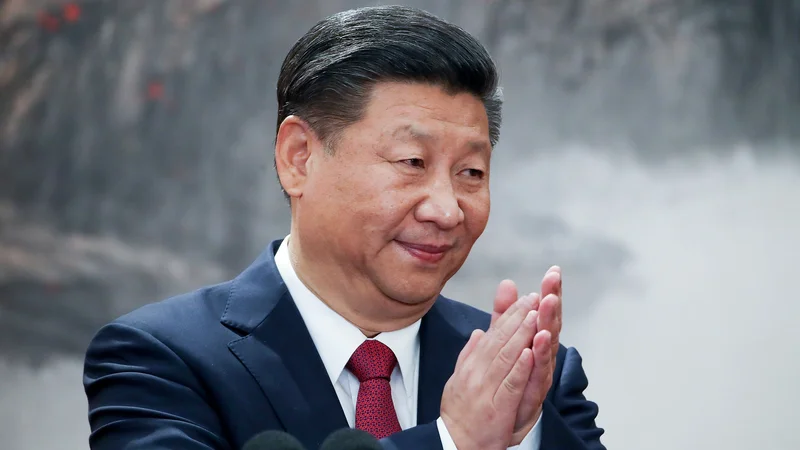
The point is that China isn’t just reacting to us anymore. In fact, Xi Jinping is personally involved in China’s new five-year plan, mapping out their economic course to 2030. They’re focused on advanced manufacturing, green tech, and solidifying their own sphere of influence. They’re playing the long game. They’re building an economic and military bloc that doesn’t need our approval, our markets, or our soybeans.
So when Trump threatens to "stop doing that"—importing massive amounts from China—who does he think he’s really threatening? The supply chain chaos and economic implosion would hit us just as hard, if not harder. We’ve spent decades off-shoring our manufacturing, and now we’re acting shocked that the factory owner has leverage. It's a level of strategic blindness that is, frankly, terrifying. We're so obsessed with winning the last war that we haven't even noticed a new one has started. And offcourse, our politicians are too busy scoring points on cable news to care.
A Picture Worth a Thousand Warnings
Remember that photo from last month? Kim, Xi, and Putin, all standing shoulder-to-shoulder on Tiananmen Square for a military parade. It was Kim’s first time at a big international gathering. He looked like a kid who’d just been invited to sit with the seniors. And that’s the image we should be focused on. Not the fireworks in Pyongyang, but the quiet, confident alignment of these three powers.
This isn’t just about North Korea anymore. It’s about a world where Russia provides the military muscle and natural resources, China provides the economic engine and technological surveillance, and North Korea provides... well, North Korea provides plausible deniability and a willingness to do the dirty work nobody else will. They're the rabid dog on a leash that can be let go at any time.
The presence of China's second-in-command in Pyongyang isn't just a courtesy call. It’s Beijing’s highest-level visit since 2019. It’s a message. It says, "He's with us now. An attack on him is an attack on our interests." It’s an underwriting of the entire North Korean regime by a global superpower.
And we’re just... what, exactly? Threatening tariffs? Complaining about trade imbalances? It feels like we’re trying to put out a forest fire with a squirt gun. The world is re-aligning in real time, and our entire foreign policy debate seems stuck in 2016. It’s exhausting. Then again, maybe I'm the crazy one here. Maybe this is all just posturing and it'll all blow over. But my gut tells me we're watching the prologue to something much, much uglier, and history will not be kind to those who were staring at their phones when the curtain went up.
So, Are We Just Gonna Pretend This Isn't Happening?
Let's be brutally honest. We're watching the formation of a hostile, anti-Western bloc, and our response is a mix of economic chest-thumping and blissful ignorance. This isn't some distant problem. This is the new reality. While we argue about pronouns and inflation, they're divvying up the globe. The party in Pyongyang wasn't the main event; it was the after-party for a deal that's already been signed. And we weren't even invited.