
Article Directory
I’ve spent my entire career looking at data, searching for the patterns that tell us where we’re going. But lately, I’ve been staring at two completely different sets of data about a single group of people, and the story they tell is one of the most profound, and frankly, heartbreaking, I’ve ever seen.
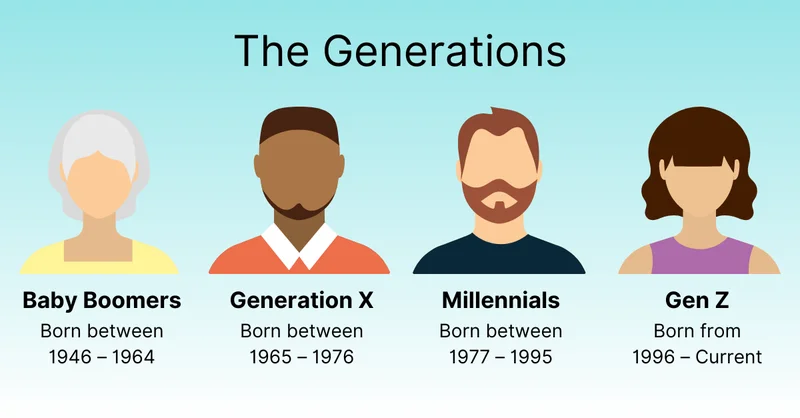
The group is Generation Z—loosely, anyone born between 1997 and 2012. The first set of data is a quiet, devastating alarm bell. A Stateline analysis of federal statistics shows that for young adults in this generation, suicide is claiming more lives than it did for millennials at the same age. It’s a crisis of despair, hitting young Black and Hispanic men the hardest, a silent epidemic blooming in the shadows of economic anxiety, digital isolation, and a cultural stigma that tells them to just “be strong.”
When I first read the Stateline report, Suicide claims more Gen Z lives than previous generation, about the numbers climbing in states like Georgia and Texas, about a 27-year-old named Julian Rivera who felt the crushing weight of an unfulfilling job and the sting of discrimination before he was lost, I honestly just sat back in my chair, speechless. It’s the kind of data that feels less like a statistic and more like a wound.
But then there’s the second set of data. It’s loud. It’s vibrant. It’s global. We're seeing it in stories like From Madagascar to Morocco: Gen Z protests shake Africa, where that very same generation is rising up. They’re organizing on TikTok and Discord, using anime symbols as their banners, and demanding a complete overhaul of the systems they see as corrupt and broken. They are not asking for change; they are engineering it in real-time.
How can a generation be both so broken and so breathtakingly defiant at the same time? For weeks, I’ve been obsessed with this question. And I think I’ve found the answer: these aren’t two different stories. They are two sides of the same revolutionary coin.
The Great Recalibration
Let’s be clear about what we’re witnessing. The narrative that Gen Z is somehow “split” between motivated entrepreneurs and emotionally overwhelmed quiet-quitters completely misses the point. A college lecturer, Jeff LeBlanc, wrote about this beautifully, noting that while his students are more skeptical and questioning, their core values—kindness, communication, expertise—haven't changed. They're not fractured; they're adapting.
I believe what he’s seeing in the classroom is a microcosm of a global phenomenon. This isn't a split; it's a recalibration. Generation Z is the first cohort in human history to come of age with a planetary-scale, real-time nervous system in their pocket. Think about that. They didn't just grow up with the internet; they grew up in it. Their social lives, their sense of identity, and their awareness of the world’s injustices were all forged in the crucible of the digital age.
This creates a paradox, one articulated perfectly by researcher Jonathan Haidt: they were "overprotected in the real world and underprotected in the virtual world." They were shielded from scraped knees but exposed to the full, unfiltered horror and hypocrisy of the adult world before they were old enough to process it. Is it any wonder they’re struggling? What if the anxiety and depression we’re seeing aren’t a sign of weakness, but a perfectly rational response to inheriting a world riddled with systemic failures they can see with crystal clarity on their phones every single day?
The pain is the input. It’s the raw data stream of a world that feels unstable, unfair, and often, deeply unkind. The rising suicide rates are the tragic cost of that data overload for those who feel they have no way to process it or fight back. It’s the system error message flashing for a generation that feels trapped.
The Global Uprising as an Immune Response
But what happens when that same generation, fluent in the language of networks and memes, decides to stop just receiving the data and starts writing new code? You get what we’re seeing right now in Africa, in Asia, in Europe. You get a global immune response.
Look at Madagascar. Young people carrying flowers, peacefully protesting for basics like water and electricity, were met with violence. Their response? They dug in deeper. They aren’t just fighting a local government; they’re inspired by protesters in Nepal, using the same pirate symbol from a Japanese anime—a cartoon skull in a straw hat—to signal their shared fight against a repressive global order.
This is a paradigm shift. We’re talking about decentralized, digitally-native movements that can mobilize thousands in hours—in simpler terms, there’s no single leader to arrest, no central office to shut down. It’s a leaderless, swarm-like form of activism that traditional power structures have no idea how to handle. This is the same technological fluency that gets blamed for their isolation being weaponized into a tool for global solidarity, and the speed of it is just staggering—it means the gap between a local injustice in Nairobi and a supportive hashtag trending in Seoul is closing faster than we can even comprehend.
This isn't just about politics anymore. It’s a generation looking at the promises made by millennials and older generations—work hard, get a degree, buy a house—and seeing them as a fantasy. So they're asking a more fundamental question, the same one those students in LeBlanc's class were asking about leadership: "Is this system even working?" Their protests aren’t just a demand for better policies; they’re a demand for a better reality. And what choice do we have but to listen? The ethical responsibility falls on us not to dismiss their anger as naive or their pain as fragility, but to see it for what it is: a clear-eyed diagnosis of a world that desperately needs to heal.
This Isn't a Fracture, It's an Awakening
So, no, I don’t see a generation that’s split. I see a generation processing an unbearable weight and choosing to answer with both private pain and public power. The despair and the defiance are not contradictions; they are cause and effect. This is what it looks like when the first truly global citizens wake up to the fact that they are all in this together. They are not the anxious generation. They are the generation that is finally making the rest of the world anxious enough to pay attention. And that, I believe, is the beginning of hope.