
Article Directory
Mark Cuban's "Ponzi Scheme" Past: A Calculated Risk or Just Dumb Luck?
Mark Cuban, the billionaire owner of the Dallas Mavericks and the force behind Cost Plus Drugs, recently recounted a story on the "Life in Seven Songs" podcast about a "chain letter" scheme he ran during his time at Indiana University. He called it "basically a scam" and a "Ponzi scheme." The details are simple: people gave him $100, he kept $50, and supposedly ensured his friends got their money back. The question isn't whether it was technically illegal—it probably was—but whether it reveals something fundamental about Cuban's approach to risk and reward.
The Numbers Don't Lie (But They Can Be Misleading)
Cuban's description of the scheme is remarkably candid. He admits he kept half the money. He acknowledges it was a scam. He even uses the "Ponzi scheme" label himself. Now, let's be clear: a true Ponzi scheme relies on a constantly expanding pool of new investors to pay off earlier ones. Did Cuban's operation fit that model precisely? Unclear. But the core principle of using new money to cover old debts (or, in this case, initial investments) was certainly in play. Mark Cuban Says He Ran A 'Ponzi Scheme' In The 80s To Pay For College. 'It Was Basically A Scam' - Yahoo Finance
What’s missing is a breakdown of the actual numbers. How many people participated? What was the total amount of money involved? Did everyone truly get their money back, or just his "friends"? These details matter. A small-scale operation involving a few hundred dollars is different from a larger one with thousands at stake. (The podcast didn’t delve into these specifics, unfortunately).
Cuban frames this as a means to fund his junior year of college, a period when he was already hustling, coming from a working-class background where every dollar counted. He received occasional $20 bills from his dad, which, adjusted for inflation, is about $70 today. Let's assume, for the sake of argument, that Cuban pocketed, say, $500 from this scheme (ten investors, his $50 cut). That would have been a significant sum for a college student in the late 1970s, roughly equivalent to a month's rent.
From Dorm Room Hustle to Billion-Dollar Deals
The interesting part isn't the morality of the scheme itself – college students do ethically questionable things all the time. It's the through-line from that early hustle to Cuban's later business ventures. After getting fired from a PC software store—for being too good at sales, ironically—he started MicroSolutions, eventually selling it for millions. He then co-founded AudioNet, which became Broadcast.com and was acquired by Yahoo for $5.7 billion.
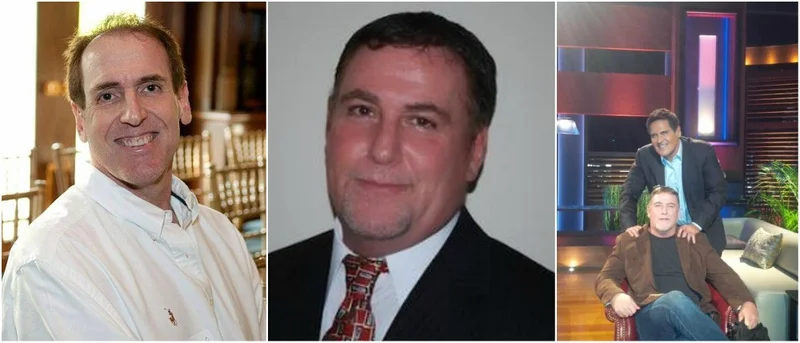
The common thread? A willingness to take calculated risks, a keen eye for opportunity, and an understanding of how to leverage other people's money (or, in the case of Broadcast.com, other people's bandwidth). Cuban's current focus on Cost Plus Drugs, aiming to disrupt the pharmaceutical industry by offering lower prescription drug prices, fits this pattern too. It's a high-stakes gamble with the potential for massive social impact (and, of course, profit).
I've looked at enough SEC filings to know that "disruption" is a word used very loosely by founders. But Cuban's Cost Plus Drugs is actually delivering real discounts to consumers. Whether that will continue, and whether it can scale to truly challenge the established pharmaceutical giants, remains to be seen.
A Calculated Risk-Taker, Then and Now
The "chain letter" incident, viewed through the lens of Cuban's subsequent career, appears less like a youthful indiscretion and more like an early indicator of his entrepreneurial DNA. He saw an opportunity, assessed the risk (getting caught, alienating friends), and acted decisively. It's a pattern that has repeated itself throughout his career, albeit on a much grander scale.
The question isn't whether what he did was right or wrong; it's whether that same willingness to bend the rules, to operate on the edge, is what ultimately propelled him to success. And perhaps, more importantly, whether that same approach, now applied to Cost Plus Drugs, will ultimately benefit consumers or simply enrich Mark Cuban even further. Only time—and the next quarterly earnings report—will tell.