
Article Directory
It’s easy to get lost in the noise. Turn on the news, scroll through your feed, and what do you see? Political battles, shutdown threats, and a constant drumbeat of fear and uncertainty. You see headlines about Senator Elizabeth Warren slamming a new stablecoin law, warnings of conflicts of interest, and dire predictions of financial instability. It feels chaotic, messy, and frankly, a little scary.
But I want you to take a step back with me. I want you to look past the frantic headlines and see the bigger picture. Because what we're witnessing isn't the breakdown of a system. It's the birth of one.
When I first read the latest Elizabeth Warren news, detailing her letter to the Treasury about the GENIUS Act for stablecoins, I honestly just sat back in my chair and smiled. Not because I relish political conflict, but because this is the kind of breakthrough that reminds me why I got into this field in the first place. This intense, high-stakes debate isn't a sign of failure; it's the most powerful and necessary stress test imaginable for the next generation of our financial infrastructure. We are watching, in real-time, as the antibodies of our economic and political system grapple with a truly disruptive technology. And that’s a profoundly good thing.
The Necessary Friction of Innovation
Let's be clear about what we're talking about. The GENIUS Act is an attempt to regulate stablecoins—in simpler terms, these are cryptocurrencies designed to hold a steady value, usually by being pegged to a real-world asset like the U.S. dollar. Think of them as digital dollars that can move at the speed of the internet, without the multi-day settlement times of the traditional banking system. The potential is staggering.
But with great potential comes great risk. And that’s where figures like Senator Warren come in. Her letter raises absolutely critical points about consumer protection, illicit finance, and the kind of systemic risk that could, as she puts it, "blow up our entire financial system." She points to real-world stumbles, like Paxos accidentally minting a colossal number of tokens due to a technical glitch, as proof that this technology is not yet foolproof.
And you know what? She's right.
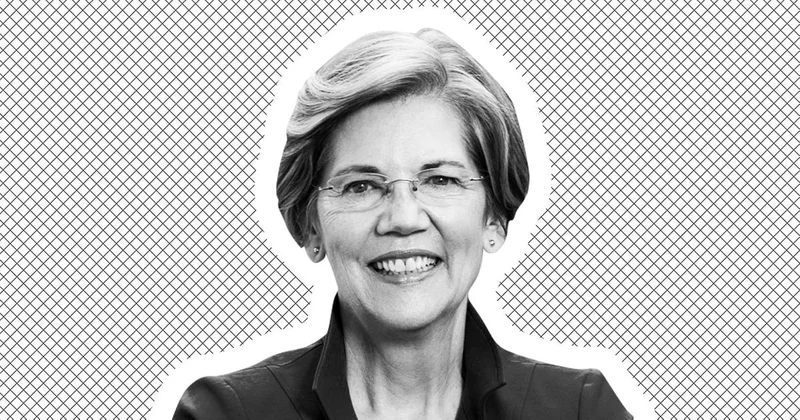
The critics are not the enemy of progress here; they are an essential part of it. Every concern they raise is a bug report for the future of finance. Every demand for stronger safeguards is a blueprint for building a more resilient system. This isn't a simple story of innovators versus regulators. It’s a collaborative, if sometimes adversarial, process of forging something new. It’s like building a skyscraper. You don't just throw up the beams and hope for the best. You have engineers, safety inspectors, and architects arguing over every single rivet and calculation to ensure the final structure can withstand an earthquake. Warren, and others like her, are the chief safety inspectors for our new economic architecture. Are their methods sometimes political? Of course. But the questions they force us to answer are the very ones that will prevent a future catastrophe.
Forging the Rails of a New Economy
This moment feels, to me, very much like the early days of the railroad. Back then, you had dozens of different companies laying track with different gauges—different widths—all across the country. A train from one line couldn't run on another. It was a chaotic, inefficient mess driven by competing interests. It took years of painful negotiations, political fights, and federal mandates to standardize the system. That process was surely filled with angry headlines and accusations, but it was the necessary friction that created the seamless national network that powered a century of American growth.
That's what we're seeing now with digital assets. The political theater, the meetings between lawmakers like JD Vance and AOC and crypto executives, the arguments over every line of legislation—this is the modern equivalent of standardizing the rails. We are deciding, as a society, what the rules of the road will be for money in the 21st century.
And just imagine where those rails will take us. Imagine a world where international payments are as fast and cheap as sending an email, where artists can receive micropayments instantly when someone enjoys their work, where humanitarian aid can be delivered directly to a digital wallet in a crisis zone without intermediaries—the speed and efficiency this unlocks means the gap between a great idea and its global implementation is closing faster than we can even fully comprehend. This isn't just about making transactions faster; it's about rewiring the fundamental logic of value exchange on a global scale.
Of course, this power demands immense responsibility. The concerns about corruption and conflicts of interest, especially when political figures are involved, are not just valid; they're vital. We must build a system with transparency and accountability at its core. But to shrink from the challenge because it's difficult or politically messy would be a historic mistake. It would be like abandoning the railroad because standardizing the tracks was too much of a headache.
What does this future, built on a foundation of regulated, trusted digital dollars, look like for you? How does it change the way you think about your business, your savings, or your connection to the global economy? These are the questions we should be asking ourselves, because the answers are being written right now.
The Blueprint Is Being Drawn
Let's stop seeing the political firestorm around crypto as a sign of its impending doom. It is the exact opposite. It is the sound of construction. The intense scrutiny from Washington, the sharp critiques from Sen. Warren slams stablecoin law and urges Treasury to address Trump conflict of interest concerns and financial risks, and the passionate defense from the industry's builders are not signals of a crisis. They are the sparks flying from the forge as a new financial world is hammered into shape. This isn't chaos; it's creation. And we all have a front-row seat.