
Article Directory
The Two JetBlues: One for the Public, One for the Balance Sheet
Inside a cavernous hangar at Orlando International, the air smells of jet fuel and possibility. On September 20th, JetBlue hosted its 11th annual “Fly Like a Girl” event, putting more than 150 young people into the cockpit of an Airbus A320, letting them touch the rivets and dream of aviation careers. It’s a flawless piece of corporate citizenship, burnishing an image of a forward-thinking, community-focused airline.
Then there’s the promotion. Dubbed “25 For 25,” it’s an offer so audacious it borders on the absurd: fly to 25 unique destinations before the end of the year, and JetBlue will grant you elite Mosaic 1 status for the next quarter-century. They’ll also throw in 350,000 TrueBlue points, which we can value at roughly $4,550. It’s a spectacular, headline-grabbing gambit designed to generate intense loyalty and buzz.
Taken together, these two initiatives paint a picture of a confident, thriving company investing heavily in its future—both in the next generation of aviators and in its most loyal customers. It’s a compelling narrative. The only problem is that it bears almost no resemblance to the story being told by the numbers.
A Glaring Discrepancy in the Data
While JetBlue’s marketing department is busy planning for 2050, its stock is in a nosedive. As of mid-October, JBLU shares are down over 40%—to be more precise, about 41% year-to-date, a situation prompting headlines like Airline Stocks Face Turbulence: JetBlue Crashes 41% and Experts Sound Alarm. Wall Street’s sentiment is, to put it mildly, grim. Weiss Ratings recently slapped the stock with a rare “sell (D-)” rating. The consensus among analysts is “Reduce,” with a 12-month price target of just $5.28, offering trivial upside from its current perch around $4.40.
This isn’t just a case of an airline hitting a patch of turbulence. This is a fundamental divergence from the rest of the industry. We are in the middle of a historic travel boom. The International Air Transport Association (IATA) is forecasting that industry revenue will top $1 trillion in 2025. Delta Air Lines just blew past its Q3 earnings estimates, raised its full-year guidance, and saw its stock pop 5%. American Airlines topped its Q3 forecasts, too, and analysts see a potential 30-40% upside in the stock. United carries a “Buy” consensus. These legacy carriers are capitalizing on tight capacity and surging demand for premium tickets, with Delta reporting a 9% year-over-year jump in premium cabin revenue.
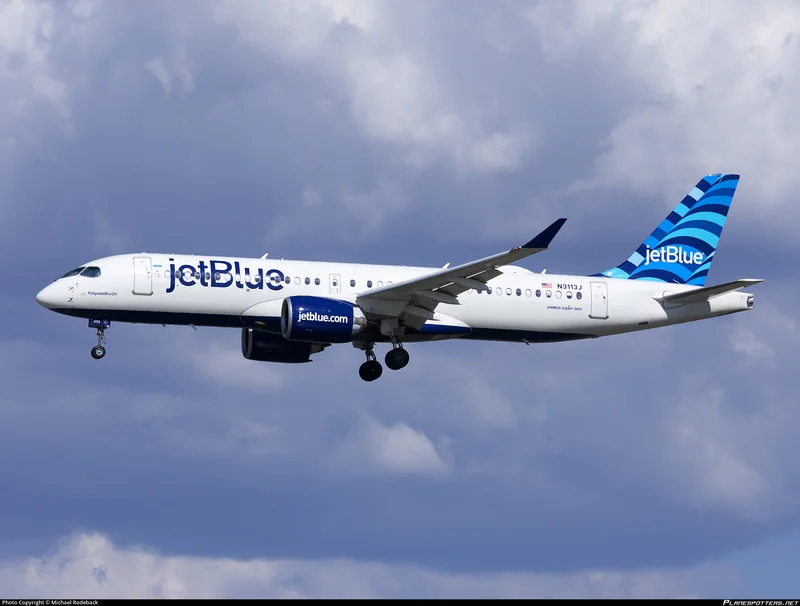
And then there's JetBlue. In this same environment, the company posted a Q3 loss of $0.16 per share. It’s forecasting a drop in unit revenue alongside a 3.5% to 5.5% rise in non-fuel unit costs. Its debt-to-equity ratio is a staggering 3.21.
JetBlue's current strategy feels like a homeowner throwing a lavish block party to distract from a foreclosure notice nailed to the front door. The music is loud and the food is free, but the underlying reality of the balance sheet remains unchanged. The disconnect between the public-facing narrative and the financial data is one of the most severe I’ve seen in this sector. It begs a critical question: is this aggressive marketing a sign of confidence, or a symptom of desperation? Are these promotions a brilliant strategy to secure long-term customers, or a frantic attempt to pull forward revenue and generate cash flow to service a heavy debt load?
I've looked at hundreds of these filings, and this particular pattern is unusual. A company burning cash and underperforming its peers in a boom market doesn't typically launch one of the most generous loyalty promotions in aviation history. The liability of granting 25 years of elite status to potentially thousands of travelers is not insignificant. How does that square with a balance sheet already under immense pressure? What does management see that the market is missing? Or, more worrisomely, what is the market seeing that management is trying to obscure with a marketing blitz?
There are, of course, counter-signals. Institutional investors own 83.71% of the stock, and some are buying the dip. A recent filing, JetBlue Airways Corporation $JBLU Shares Acquired by U S Global Investors Inc., shows U S Global Investors Inc. grew its stake by over 25%. Management insists that the worst of its engine-related operational issues are behind them and that a fleet of newer, more efficient A320neo jets will fuel long-term growth from 2026. This is the bull case: a temporary operational trough obscured by a fantastic long-term value proposition. Perhaps these institutions see a deeply undervalued asset and are willing to wait out the storm. But for an airline, two years is an eternity, and a lot can go wrong between now and 2026.
The Numbers Don't Have a Narrative
Ultimately, an airline is a business of margins. It’s a brutal, capital-intensive operation where success is measured in cents per available seat mile. Feel-good community events are commendable, and aggressive promotions can certainly capture market share. But neither can defy financial gravity forever.
The market is telling us that JetBlue’s costs are too high, its debt is too burdensome, and its path to profitability is unclear, especially when its larger competitors are executing so effectively. The story presented by the “Fly Like a Girl” event and the “25 For 25” promotion is one of strength. The story told by the income statement and the stock chart is one of profound weakness. In my experience, when you’re faced with two conflicting stories, the numbers are the one to bet on. They don’t have a marketing budget, and they never lie.