
Article Directory
Of all the strange and wonderful signals broadcast across our digital landscape, few are as beautifully chaotic as CNBC’s Mad Money. To the uninitiated, it’s a sensory overload—a whirlwind of ringing bells, cartoon sound effects, and a man in rolled-up shirtsleeves yelling stock tickers at the camera as if his life depends on it. When I first started watching the Mad Money show, my academic side, the part of me trained at MIT to look for clean data and elegant systems, wanted to dismiss it as pure noise. It felt like the antithesis of calculated, rational analysis.
But the technologist in me was, and remains, absolutely captivated. Because I believe we’ve been asking the wrong question. We ask, “Should I buy the stocks Jim Cramer recommends?” when the far more profound question is, “What is this phenomenon?” I’ve come to see Mad Money not as a simple financial advice program, but as one of the most fascinating, ongoing experiments in human-computer interaction. Jim Cramer isn't just a host; he's a biological API—a messy, emotional, deeply human interface for the cold, terrifyingly complex machine of the global market.
He’s a translator. On one side, you have the market: a high-frequency torrent of algorithmic trading, quarterly earnings reports written in dense legalese, and geopolitical tremors that shift trillions of dollars in microseconds. On the other side, you have us—people trying to build a future, save for retirement, and make sense of it all. In between stands Cramer, attempting to convert that machine language into something we can feel. The yelling, the props, the "BOOYAH!"—these aren't bugs in the system. They are the features of his user interface, designed to convey conviction, urgency, and caution in a way that a sterile stock chart simply cannot. Is it any wonder why, in an age of robo-advisors and AI-driven funds, millions still tune in to watch this one man try to wrestle the beast?
The Algorithm in the A-Frame
To understand the output, you have to look at the code. Cramer’s journey wasn't accidental; it was the decades-long process of training a unique neural network. This is a man who graduated from Harvard, worked as a journalist, then went back to Harvard for a law degree. He didn't just fall into finance; he attacked it from multiple angles. He was there, on the inside at Goldman Sachs, and then ran his own hedge fund, reportedly earning over $10 million a year. This isn't just a resume; it's the record of his training data. He has spent a lifetime processing immense volumes of information—not just numbers, but narratives, legal structures, and human psychology.
This is the kind of experience that reminds me why I got into this field in the first place—to see how information shapes us. Cramer is trying to process earnings reports, geopolitical shifts, consumer sentiment, and Fed policy in real-time and then broadcast a coherent signal—it’s a staggering cognitive load that no spreadsheet can fully capture because it involves fear and greed, the most human of inputs. His core philosophy, when you strip away the noise, is surprisingly conservative. A core tenet of Jim Cramer’s Advice: Selling Speculative Stocks is to avoid companies built on pure hype and promises rather than actual profits. His advice to focus on businesses with solid earnings and resilient portfolios isn't flashy, but it’s the foundational code that runs beneath the chaotic surface of the Mad Money with Jim Cramer broadcast.
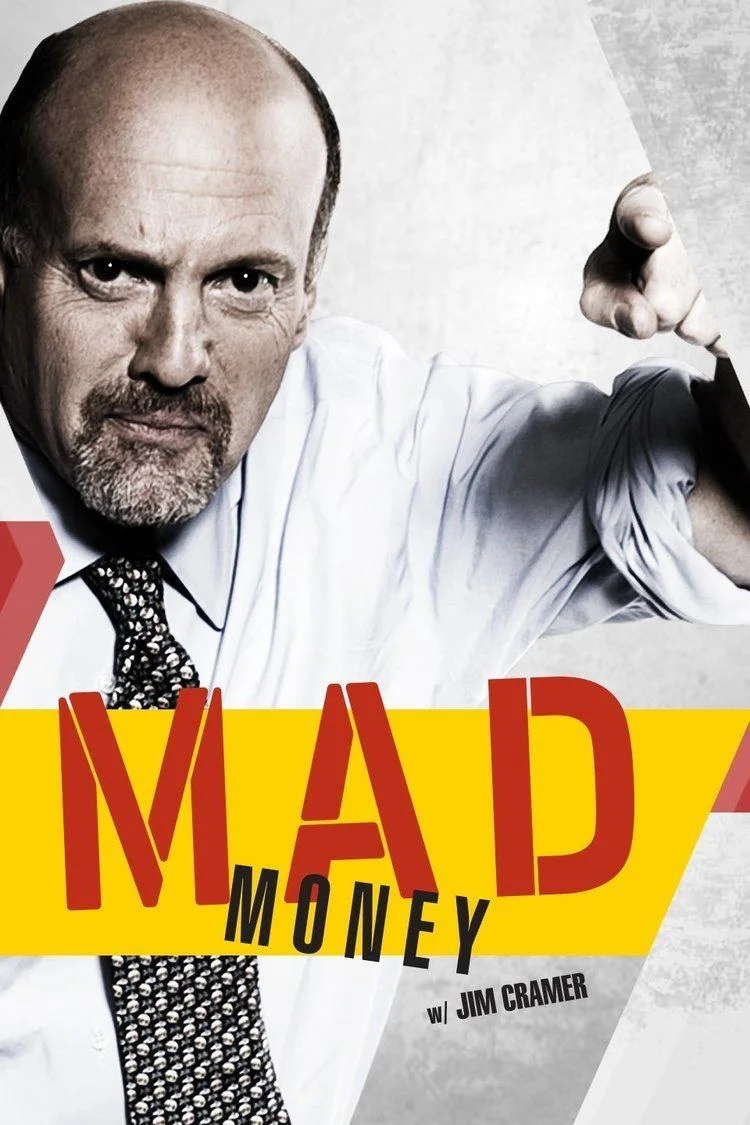
This puts his infamous public clashes, like the one with Jon Stewart after the 2008 crisis, in a new light. Critics saw a showman who failed to predict a catastrophe. But as a technologist, I see a human processor pushed to his absolute limit, grappling in public with the failure of a system that had become too complex for any single human to parse. Was he wrong about some things? Of course. But the spectacle wasn't his failure; it was a reflection of the system's. He was the canary in the coal mine, gasping for air on live television. What does it say about our financial systems when the most popular human interpreter is forced to scream just to be heard over the machine's hum?
A Bridge to Tomorrow's Data
Cramer’s role reminds me of the town criers before the printing press. In a world of limited literacy, you needed a trusted, central voice to shout the day’s most vital news. Today, we live in an age of overwhelming financial and technological literacy. We are drowning in data. We don't need more information; we need more interpreters. We need people who can stand in the middle of the data storm and provide context, narrative, and a human gut-check.
Of course, with this role comes an immense ethical responsibility. The ability to move a stock with a single segment is a power that can't be wielded lightly. It’s a direct link between broadcast information and real-world financial consequences for millions of families. This is the delicate, and frankly, dangerous, part of the human-API equation. Unlike a machine, a human translator has biases, emotions, and the capacity for error. But also, unlike a machine, a human has the capacity for empathy.
So what happens next? As artificial intelligence becomes more and more integrated into our financial lives, will we even need a Jim Cramer? I believe we'll need him, or people like him, more than ever. AI can tell you the what—the probability of a stock rising based on a billion data points. But it can't tell you the why in a way that resonates with our human hopes and fears. It can't look you in the eye, even through a camera lens, and convey a sense of shared risk or opportunity. As our tools become colder and more logical, our need for passionate, human guides will only intensify. We will need people to stand between us and the algorithms, not as gatekeepers, but as translators, helping us make sense of the new world we are building together.
The Necessary Human Glitch
Ultimately, Jim Cramer is a glorious, necessary glitch in the matrix of modern finance. He’s a throwback and a harbinger all at once. He proves that no matter how powerful our technology becomes, the final decisions—the ones that involve our money, our future, and our trust—remain profoundly human. We can build perfect algorithms and flawless predictive models, but we will always crave the imperfect, passionate, and utterly human signal in the noise. He’s not the market’s master; he’s its most dedicated and loudest student, and he’s inviting us all to watch him do his homework live on air, every single night. And in a world racing toward sterile automation, that’s not just entertaining. It’s essential.