
Article Directory
The Citi Strata Elite Card: A Deep Dive into the Numbers Behind the Hype
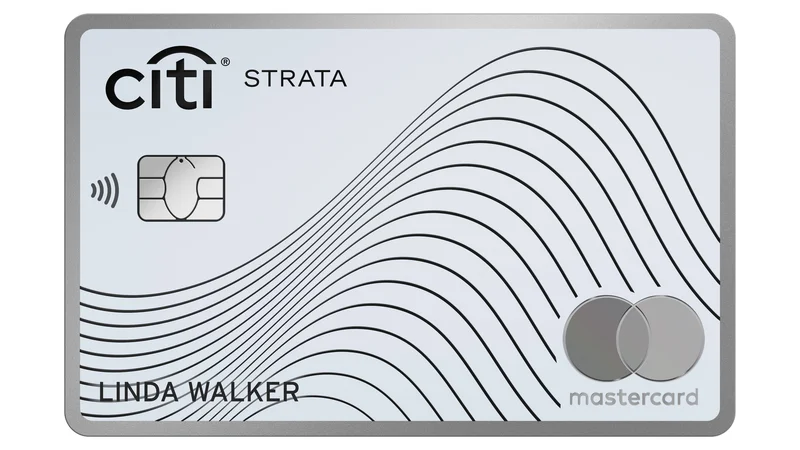
The release of a new premium travel card is always accompanied by a predictable wave of marketing enthusiasm. With the Citi Strata Elite, the narrative has been amplified by a recent, limited-time welcome offer: 100,000 ThankYou points. This is an increase from the initial 80,000-point public offer and matches the previously in-branch-only bonus. The spend requirement has also increased from $4,000 to $6,000 in the first three months.
On the surface, the numbers are compelling. The welcome offer is valued at approximately $1,900 (based on TPG's 1.9 cents per point valuation), which easily eclipses the $595 annual fee. But the long-term viability of any financial product isn't determined by its introductory offer. It’s determined by its underlying structure, its efficiency, and its alignment with user behavior. My analysis suggests that while the Strata Elite presents a mathematically positive first-year proposition, its long-term value equation is burdened by a series of peculiar and highly specific constraints.
Deconstructing the Benefit Matrix
A premium card’s annual fee is justified by its recurring benefits. Citi claims the Strata Elite offers "nearly $1,500 in value," a figure that requires a closer look. As detailed in one Citi Strata Elite review: Unique credits and lounge access, the primary value drivers are a series of statement credits. The total annual credits appear to be around $700—or more precisely, $700 in nominal value, contingent on specific spending patterns.
Let's break down the ledger:
* $300 Annual Hotel Credit: This is tied to a prepaid, minimum two-night booking through the Citi Travel portal.
* $200 "Splurge" Credit: This can be applied to a choice of two pre-selected merchants, including American Airlines and Best Buy.
* $200 Blacklane Credit: This is the most esoteric of the bunch, split into two semi-annual $100 credits for a premium chauffeur service.
And this is where the model, for me, begins to break down. The assumption that a cardholder can seamlessly extract full value from these siloed credits each year feels… optimistic. The hotel credit's portal restriction immediately introduces friction, preventing users from booking directly or taking advantage of hotel-specific loyalty benefits. The Blacklane credit is an outlier; it’s a benefit for a niche service that a significant portion of the target demographic will likely never use, effectively reducing its real-world value to zero for many. It functions less like a broad travel benefit and more like a coupon for a service one might not otherwise consider.
The entire system of credits feels like a Rube Goldberg machine for value extraction. Instead of a simple, fungible travel credit like the one offered by the Chase Sapphire Reserve, the Strata Elite requires you to pull specific, separate levers at specific times to hopefully recoup your annual fee. Does this model really serve the customer, or does it serve the issuer by banking on breakage—the value left on the table by cardholders who don't or can't navigate the complexity?
An Anomaly in Earning Structure
The card's earning structure is even more perplexing. It offers an impressive 12 points per dollar on hotels and car rentals and 6 points on airfare, but only when booked through the Citi Travel portal. This forces a trade-off between maximizing points and the benefits of direct booking, such as loyalty status recognition and customer service simplicity.
The most unusual feature, however, is the "Citi Nights" promotion. Cardholders earn 6 points per dollar at restaurants, but only on Fridays and Saturdays between 6 p.m. and 6 a.m. Eastern Time. Outside that 24-hour weekly window, the rate drops to 3 points. While 6x on dining is a strong multiplier, the temporal restriction is needlessly complex. It’s a gimmick.
This is a classic case of over-engineering a product. Premium cardholders value simplicity and predictability. They want to know that their primary travel and dining card will reliably deliver a competitive return on their largest spending categories. But how many cardholders will genuinely alter their dining habits to capture a bonus window defined by Eastern Time, regardless of where they are in the world? It introduces a layer of cognitive load that its primary competitors simply don’t have.
The one unambiguous positive in the card's entire structure is the addition of American Airlines as a 1:1 transfer partner. This is a significant development, as it opens up the highly valuable AAdvantage program to a flexible currency for the first time. For frequent AA flyers or those adept at finding value in Oneworld partner awards, this feature alone could be the primary justification for holding the card. It is the card’s single most compelling long-term asset. Still, one has to ask: with a sudden influx of points from a major issuer, what is the long-term risk of devaluation to the AAdvantage program itself?
A Structurally Inefficient Asset
When you strip away the launch hype and the large welcome bonus, the Citi Strata Elite reveals itself. It is not a cohesive, thoughtfully designed product for the modern premium traveler. Instead, it feels like an assembly of disparate parts—a portal-heavy earning structure, a coupon book of restrictive credits, and one genuinely excellent transfer partner. The calculus is clear: for points and miles enthusiasts who can systematically extract the 100,000-point bonus and are willing to navigate the labyrinth of credits, the first year offers a positive expected value. But as a long-term financial instrument, the card is structurally inefficient. It demands too much behavioral modification from the user for the value it provides, making it a questionable hold beyond year one when compared to the elegant simplicity of its competitors.