
Article Directory
I had to read the headline twice. Base Power raises $1B to deploy home batteries everywhere. A billion dollars. With a ‘B’. For a company that’s barely two years old, selling home batteries in Texas. When I first saw the news about Base Power’s new funding round, I honestly just sat back in my chair, speechless. We see big numbers in tech all the time, but this one felt different. This wasn’t just an investment in a hot startup; it felt like a down payment on an entirely new kind of future.
For years, we’ve talked about decentralizing our infrastructure, about moving away from the brittle, top-down systems of the 20th century. We’ve dreamed of a world where power—both literally and figuratively—resides with individuals, with communities. But it’s always been just that: a dream. A nice idea for a conference talk. What Base Power is doing, armed with a war chest that would make a nation-state blush, is turning that dream into a reality with breathtaking speed.
They’ve sold over 100 megawatt-hours of storage in just two years. That’s not a pilot program; that’s a movement. And with this new funding, they’re about to hit the accelerator so hard it might just break the floor. This is the kind of breakthrough that reminds me why I got into this field in the first place.
The Trojan Horse in Your Garage
Let’s be brutally clear: Base Power is not a battery company. Thinking of them that way is like saying Amazon was a bookstore. The battery—a massive 25 or 50 kilowatt-hour beast that dwarfs a Tesla Powerwall—is just the Trojan horse. It’s the beautiful, compelling piece of hardware that gets them inside the gates.
Their real product? The network.
For an upfront cost of less than a thousand dollars and a small monthly fee, they’re solving the biggest barrier to home energy storage: the prohibitive cost. Instead of asking you for $15,000, they’re asking for a three-year commitment to buy electricity from them. It’s a genius move. But the magic happens in the fine print. In exchange for that subsidy, you give them permission to use your battery when you’re not.
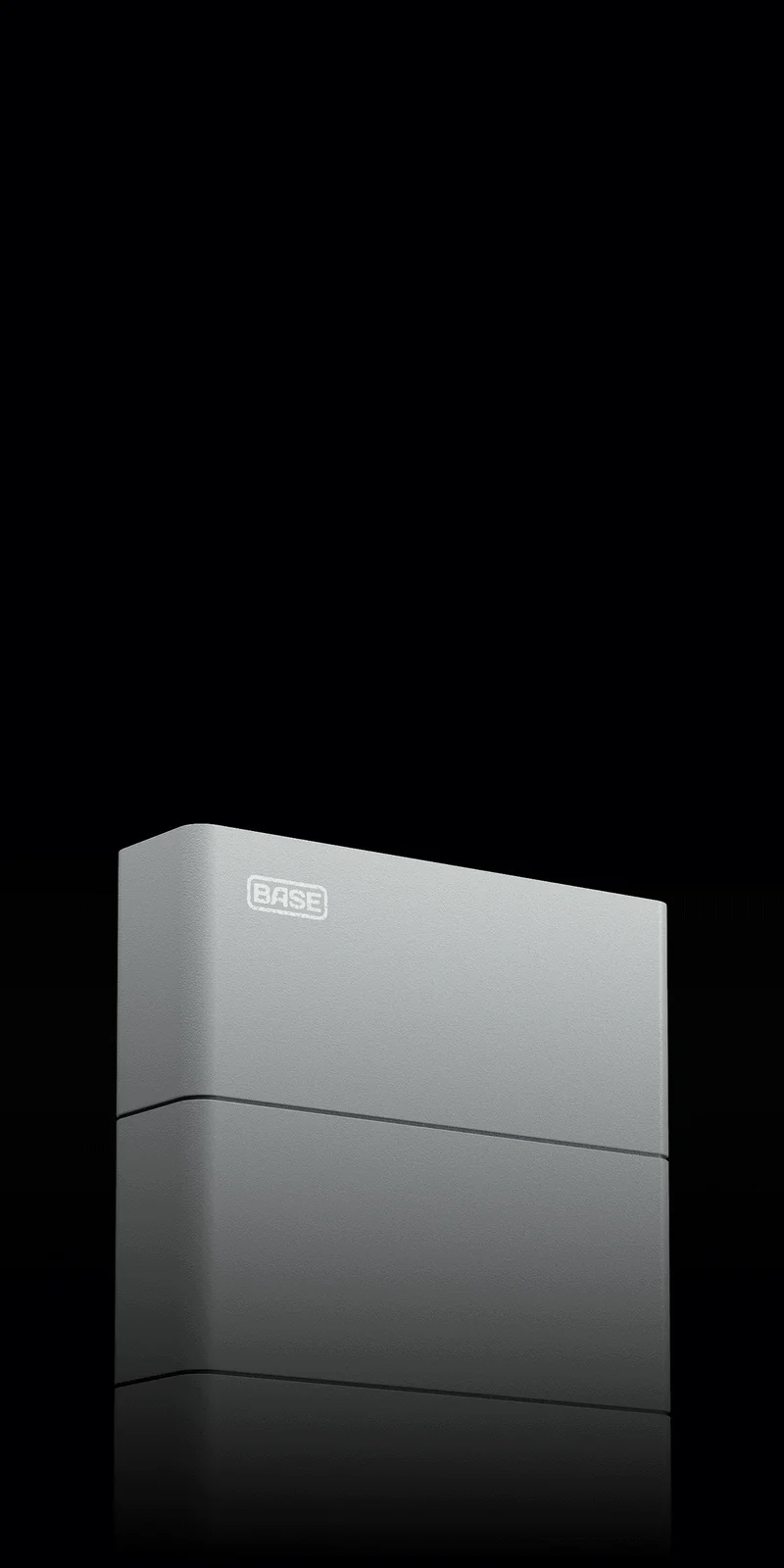
And that’s the paradigm shift. Suddenly, your home is no longer just a passive consumer of energy at the end of the line. It’s an active, intelligent node in a massive, distributed power plant. This is the shift from the mainframe to the personal computer, played out on our national power grid. For a century, giant, centralized power stations dictated the flow of energy. Now, the power is moving to the edges. To your house. To your neighbor’s house.
Imagine a sweltering August afternoon in Texas. The grid is screaming for relief, teetering on the brink of a brownout. In the old world, a massive, gas-fired "peaker" plant would have to spin up, spewing carbon and costing a fortune. In Base Power’s world, an algorithm instantly taps into ten thousand homes, drawing a little bit of stored solar power from each. The lights stay on, the A/C keeps humming, and the crisis is averted without a single puff of smoke. That isn’t science fiction. That’s what’s being built right now.
The Antidote to a Brittle World
Our current electrical grid is a marvel of 20th-century engineering, but it’s also incredibly fragile. It’s like a city that gets all its water from a single, massive aqueduct. If that one aqueduct breaks, the entire city goes thirsty. We’ve seen this happen time and again, from winter storms in Texas to wildfires in California.
What Base Power and others are building is the antidote. It’s a mesh network. Instead of one giant aqueduct, they’re creating millions of tiny, interconnected wells and reservoirs. If one part of the system goes down, the others can reroute, share, and support each other. Your home, with its 48 hours of backup power, becomes an island of stability. When thousands of those islands are connected, they form an unsinkable continent of energy resilience.
This new billion-dollar investment is going to pour gasoline on that fire, funding a second U.S. factory and expansion beyond Texas—the speed of this is just staggering, it means the gap between the grid of today and the grid of tomorrow is closing faster than we can even comprehend. But it also raises some profound questions. What happens when a single company effectively controls a virtual power plant larger than most physical ones? What are the new rules of the road for an energy market where supply can come from anywhere, at any time? We're not just installing batteries; we're rewriting the operating system of our society, and we need to be thoughtful about the code we're putting in place.
This isn't just a technological revolution; it's a social one. It’s about creating a system that is inherently more democratic, more resilient, and more aligned with the planet. It’s a fundamental re-architecting of our relationship with energy, from one of passive consumption to active participation.
The Grid is Now in Our Hands
For so long, we’ve been told the solutions to our energy problems were massive, complex, and decades away. We needed fusion, or massive carbon capture plants, or some other feat of mega-engineering. Base Power’s success points to a different, more hopeful truth. The solution isn’t some far-off silver bullet. It’s us. It’s our homes, our garages, our communities, linked together into something far more powerful and resilient than the sum of its parts. This isn't just an investment in a company; it's an investment in a new kind of independence. The power is, quite literally, coming home.