
Article Directory
Let me get this straight. You’re AST SpaceMobile. You just spent years burning through cash, promising to beam 5G from the heavens directly to a smartphone. Most of Wall Street probably thought you were selling snake oil out of a van parked near Cape Canaveral. Then, against all odds, you actually do it.
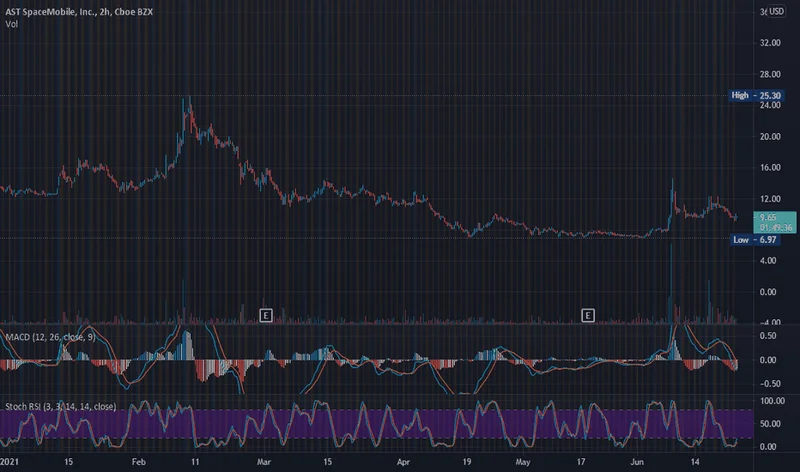
You make the world’s first space-based video call with Vodafone. You complete Canada’s first-ever 4G call from orbit with Bell. Your stock, ASTS, goes on an absolute tear, more than tripling in a year and hitting an all-time high of nearly $75 a share in early October. Retail traders on Stocktwits are posting rocket emojis like their lives depend on it. You’ve done it. You’ve proven the tech works. You’re on top of the world.
So, what’s your next move? You celebrate? You double down on manufacturing? You send your CEO on a victory tour?
Nope. You walk into the room, right at the peak of the party, and announce you’re going to print and sell up to $800 million more of your own stock. It’s like winning the Super Bowl and immediately announcing you’re trading your star quarterback for draft picks to fund "general corporate purposes." It’s a move so tone-deaf, so utterly baffling, it forces you to ask: who is this all for?
The Perfect Story Hits a Brick Wall
Before the rug pull, the story was perfect. It was a sci-fi dream turning into reality. In early October, AST announced its next-gen BlueBird-6 satellite was assembled and ready to ship. This wasn’t just another test unit; this was the real deal, the first of the fleet meant for actual commercial service. The company was finally moving from R&D into deployment.
Then came the Bell Canada news. They didn’t just send a text message—they held a full 4G voice call, sent texts, and streamed video on a standard smartphone connected to a satellite. Bell was so impressed they announced they’d start rolling out the service to customers in 2026. This was the ultimate validation. A major carrier, in a country with vast, unconnected wilderness, was officially on board. The stock, offcourse, went ballistic. Two consecutive days of ~16% jumps. A 50% surge in five days. Everyone who held the stock felt like a genius.
This is the kind of narrative that fuels markets. It’s tangible. You can picture it: a hiker in the Yukon finally getting a signal, an emergency responder in a disaster zone coordinating a rescue. It’s not some abstract software algorithm; it’s a physical solution to a real-world problem. And for a moment, it looked like AST SpaceMobile was about to deliver on that promise in a huge way.
But the market, as they say, has a short memory. The ink was barely dry on the press releases when the company filed for its at-the-market (ATM) offering. As reported in AST SpaceMobile Stock (ASTS) Dips on $800M Equity Agreement, the stock immediately slid 6%. The rocket emojis turned into angry face emojis. The dream of uninterrupted upward momentum slammed headfirst into the cold, hard reality of corporate finance.
Follow the Money, Not the Hype
Here’s the part that just doesn’t sit right with me. The company’s line is that it needs the cash to fund its "aggressive rollout." Fair enough. Launching 45 to 60 satellites ain’t cheap. But let’s look at the context. As of June 30th, AST was sitting on over $1.5 billion in cash. CEO Abel Avellan himself had just confirmed in August that the company had a "fully-funded plan to deploy 45 to 60 satellites into orbit by 2026."
So if you’re "fully funded," why the sudden urge to dilute your shareholders to the tune of another $800 million?
The timing is… suspect. No, 'suspect' is too polite—it’s brazen. You wait for the absolute peak of retail investor euphoria, when the stock is technically "overbought" with an RSI near 80, and then you announce the share sale. This isn't just raising capital; it's cashing in on hype. It feels less like a strategic funding round and more like an opportunistic cash grab while the getting's good.
And are we supposed to just ignore the insider selling? In August, CFO Andrew Martin Johnson sold over a million dollars' worth of stock. A month later, CTO Huiwen Yao dumped over $1.6 million worth, a staggering 89% of his position. The guys with the clearest view of the company’s future financials and technical roadmap decided to take a whole lot of chips off the table just weeks before this dilution was announced. What does that tell you? Does it scream confidence in the long-term value, or does it look like they’re securing their own bags while the public buys the story?
This is the oldest game on Wall Street. The tech might be new, but the playbook is ancient. You sell a fantastic story, you get the public excited, and you use their excitement as exit liquidity. The company says management will "retain broad discretion over the allocation of the net proceeds." That’s the corporate equivalent of "don't worry your pretty little heads about it, we got this." It's a blank check, and it's being funded by the very people who just pushed the stock to its all-time high.
It’s like a band finally getting its first number-one hit, and to celebrate, the lead singer and guitarist sell their publishing rights while the manager starts selling cheap bootleg t-shirts in the parking lot. Something just feels off. Then again, maybe I'm just cynical. This is how the game is played, after all.
Don't Look at the Shiny Satellite
Let's be brutally honest. The technology AST SpaceMobile has developed is genuinely incredible. Beaming broadband from space to a regular iPhone is a monumental engineering feat. But investing isn't about buying cool tech; it's about buying a well-run business that respects its shareholders. And right now, the business side of ASTS is waving a giant red flag.
When a company with a "fully funded" plan and $1.5 billion in the bank decides to dilute its stock at the peak of a retail-driven frenzy, just after its top execs cashed out millions... you have to stop looking at the shiny satellite in the sky and start looking at the paperwork on the ground. The story is amazing. The execution of the financial strategy, however, leaves a sour taste. It suggests that, for all the talk of connecting the world, the first priority might just be connecting the company to your wallet.