
Article Directory
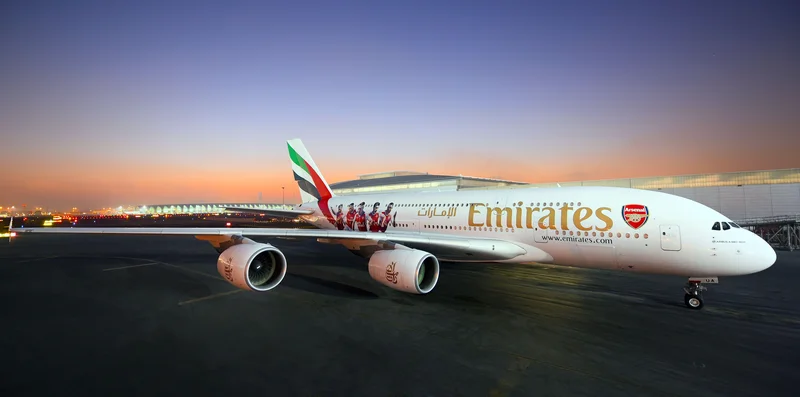
I want you to imagine something for a moment. Picture yourself stepping onto an Emirates flight. It’s not just any plane. It's one of the newly retrofitted A380s or 777s. The lighting is perfect, the seats in Premium Economy feel more like another airline’s business class, and there's this palpable sense of… precision. Of investment. This isn't just a refresh; it's a complete teardown and rebuild. Emirates is pouring nearly $5 billion into this project, the largest of its kind in aviation history, to make every single plane in its 220-strong fleet feel brand new (Emirates' Nabil Sultan on the airline's fleet retrofit and demand to the U.S.).
When I first read about the scale of this, I honestly just sat back in my chair, speechless. Five billion dollars. In a post-COVID world where most airlines are just trying to stay afloat, Emirates airlines is fundamentally redesigning the user experience of its core product. But here’s the thing everyone is missing: this isn’t about planes. It’s not even just about luxury travel. This is a single, gleaming component of one of the most ambitious and brilliantly executed national projects I have ever seen.
What we're witnessing is the construction of a "soft power" operating system. Think of the United Arab Emirates not as a country in the traditional sense, but as a platform. The airline is its global transport layer, the physical hardware connecting nodes across the planet. The sponsorships are its user interface, embedding the brand into the cultural consciousness. And now, with initiatives like the Emirates Growth Fund, we’re seeing the development of the core code—the economic engine designed to power the entire system for generations to come. It's a breathtakingly audacious strategy to build a post-oil future, and it's happening right in front of us.
The Cultural API
An operating system is useless without applications, and the UAE is building some of the most compelling "apps" in the world. Look no further than the newly minted Emirates NBA Cup. On the surface, it’s a sports sponsorship. A logo on a court, a brand name attached to a tournament. But it's so much deeper than that. It’s an Application Programming Interface—an API—into global culture.
By aligning with the NBA, the United Arab Emirates is plugging directly into a cultural phenomenon defined by youth, peak performance, and global superstars. When Shai Gilgeous-Alexander, the NBA’s reigning scoring champ, steps onto the court for a tournament game, the Emirates brand is right there with him. When Anthony Edwards, a player who embodies explosive, next-generation talent, makes a clutch shot, the association is immediate. This isn't just advertising; it's narrative integration. The brand becomes part of the story of excellence, competition, and victory. The same logic applies to their long-standing partnership with Arsenal Football Club, whose stadium famously bears the Emirates name. These aren't just marketing deals; they are strategic acquisitions of cultural real estate.
But what happens when you want to build your own applications instead of just branding existing ones? That’s where the strategy enters its next, most critical phase. You have to start funding the developers.
Writing the Source Code for Tomorrow
This brings us to the Emirates Growth Fund, a $272 million platform that, to me, is the most exciting piece of this entire puzzle. Launched in May and now helmed by Khalifa Al Hajeri, a veteran of Abu Dhabi’s legendary sovereign wealth fund Mubadala (Emirates Growth Fund names Khalifa Al Hajeri as new CEO), the EGF is designed to be the compiler for the UAE’s future economy. It’s a venture capital engine with a national mandate.
The fund’s mission is to bridge the "growth capital gap" for small and medium-sized enterprises, or SMEs. In simpler terms, it finds promising homegrown companies in critical sectors like advanced technology, healthcare, and food security and gives them the fuel—between $10 and $50 million—to scale into global players. This is the kind of breakthrough that reminds me why I got into this field in the first place. We're watching a nation-state behave like a world-class venture capital firm, identifying its most valuable assets—its people and their ideas—and investing directly in their success.
This isn't about state control. The EGF takes minority stakes, empowering founders rather than controlling them. It's a profoundly modern approach to economic diversification. While the airline physically connects the UAE to the world, the Growth Fund is building the digital and industrial sinews that will make the nation an indispensable hub for innovation. It’s a fully integrated system designed to build a post-oil future right before our eyes—one where the UAE isn't just a place on a map but a central node in the global network of talent, capital, and innovation. This is the source code for a resilient, self-sustaining economic future.
So, what does this all look like when you put it together? You have a world-class airline, the Emirates A380, acting as a physical conveyor of people and influence. You have cultural touchstones like the NBA and Premier League football making the brand synonymous with excellence. And you have a powerful financial engine actively building the next generation of national champion companies.
This reminds me of the rise of the great trading companies of the past, like the Dutch East India Company, which didn't just move goods but projected a nation's influence, culture, and economic might across the globe. This is the 21st-century evolution of that concept. But instead of spices and textiles, the commodities are innovation, entertainment, and human potential. The platform is being built, the APIs are open, and the world is being invited to connect.
Of course, with this level of strategic influence comes immense responsibility. When a nation begins to operate with the speed and ambition of a Silicon Valley behemoth, it must also adopt a profound sense of stewardship. How will this platform be used? To foster open collaboration? To build bridges between economies and cultures? All signs point to yes, but it's a question we must continue to ask. What kind of future are we building, and who gets to write the code?
A Blueprint for the Nation-as-a-Platform
Forget everything you think you know about nation-building. The old models of relying on natural resources or manufacturing are fading. What the United Arab Emirates is creating with its multi-faceted "Emirates" brand is something entirely new: a blueprint for the nation-as-a-platform. The airline, the sports deals, the venture fund—they aren't separate initiatives. They are integrated layers of a single, audacious operating system designed for the 21st century. This is how a nation secures its relevance for the next hundred years. It’s not just building a country; it’s coding a future.