Article Directory
Beyond the Shock: Why a $15 Billion Bitcoin Bust is the Best News Crypto Has Had All Year
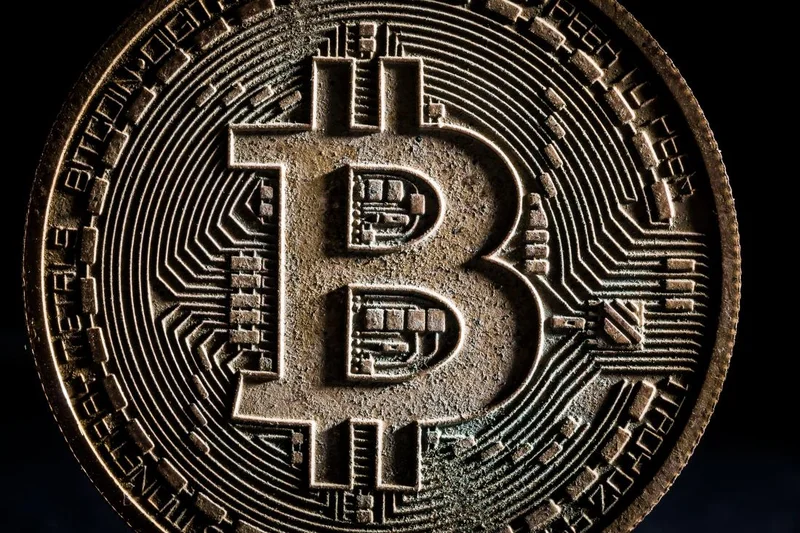
When headlines like Record $15 billion Bitcoin cyber scam seizure: Bay Area investigator visited suspect's company in Cambodia broke, the number was staggering. $15 billion. Let that sink in for a moment. The U.S. Department of Justice seizing 127,000 Bitcoin from a single criminal mastermind. It’s the kind of number that feels like a typo, the kind of `bitcoin news` that makes your stomach drop and sends the `bitcoin price` charts into a frenzy. The immediate reaction is predictable: fear, uncertainty, and another black eye for the world of crypto.
But I want you to take a breath and look past the initial shock. I want you to see what I see. Because when I first read the indictment against Chen Zhi and his so-called Prince Group, I honestly just sat back in my chair, and a strange sense of relief washed over me. This isn't a story about the failure of crypto. This is the story of its immune system finally, and powerfully, kicking in. This bust isn't the death knell for a decentralized future; it's the loud, messy, and absolutely necessary birth of its legitimacy.
What we’re witnessing is the painful but essential transition from a Wild West frontier into a settled territory with laws, sheriffs, and consequences. And for anyone who truly believes in the long-term potential of this technology, that is the best news we could have asked for.
The Rot Beneath the Floorboards
Before we can appreciate the cure, we have to stare unflinchingly at the disease. The operation run by Chen Zhi wasn't just some clever hack. It was a monstrous, global enterprise built on human suffering. The indictment calls it a "transnational criminal organization," but let's use simpler terms: it was a digital slave empire.
They used a method called a "pig-butchering" scam—a horribly apt name for a process where criminals use fake profiles and romance scams to "fatten up" a victim with trust and affection over weeks or months before convincing them to invest in fraudulent crypto schemes, ultimately slaughtering their life savings.
But the horror doesn't end with the victims. To run this global grift, Chen’s organization allegedly relied on modern-day slavery. The indictment paints a grim picture of compounds in Cambodia, where human-trafficked workers were held captive. Imagine a room, not with servers, but with a simple metal rack holding thousands upon thousands of cellphones, each one a potential line to another life to be ruined, all operated by people trapped against their will. Investigator Erin West, who visited one of these hellscapes, described 16-hour workdays and even a torture room for those who didn't comply. This wasn't just a financial crime; it was a profound crime against humanity, powered by technology.

For years, critics have used stories like this to paint the entire crypto space as a haven for criminals. They’d point to the anonymity and borderless nature of `bitcoin` and `ethereum` as inherent flaws. But they’re missing the point. The technology was never the villain; it was a tool, and like any powerful tool—from the printing press to the internet itself—it was first exploited by those who operate in the shadows. What really matters is what happens next.
A Necessary and Powerful Disinfectant
This is where the story pivots from a tragedy to a breakthrough. The DOJ’s seizure of $15 billion is like a surgeon decisively cutting out a malignant tumor. The process is invasive, the headlines are scary, and the recovery is uncertain, but it’s the only way for the healthy body to survive and thrive. Every dollar seized from Chen Zhi is a testament to the fact that the blockchain is not the untraceable, lawless void that critics claim it is. It’s a public ledger, and with the right tools and expertise, law enforcement can follow the money.
This is the kind of breakthrough that reminds me why I got into this field in the first place—the sheer speed of maturation is just staggering, it means the gap between a chaotic, experimental technology and a stable, integrated financial system is closing faster than we can even comprehend. Think about the early internet. It was rife with scams, illicit markets, and rampant piracy. People were terrified of putting their credit card information online. What changed? A combination of technological innovation (like encryption) and robust, international law enforcement that made the digital world safer. We are seeing that exact same maturation cycle happen with crypto, but at a vastly accelerated pace.
This action sends an unmistakable signal to two critical groups. First, to the criminals: your days of operating with impunity are numbered. The tools to track you are getting better every single day. Second, and far more importantly, to the institutions. For every pension fund, every major bank, and every regulator considering the approval of a `bitcoin ETF`, this is a massive de-risking event. It proves that the system has accountability. How can we ever expect mainstream adoption if the ecosystem is perceived as a playground for cartels? We can't. Actions like this one build the bedrock of trust upon which the future of finance will be built.
So, when an investigator like Erin West rightly cautions victims about the long legal road ahead for getting their money back, we shouldn’t see that as a failure. We should see it as evidence of the sheer scale of the operation and the necessity of a federal, systemic response. It begs the question: What does this level of enforcement unlock for the next wave of builders and investors who have been waiting for the signal that the coast is clear?
This Isn't an Ending, It's a Foundation
Let's be perfectly clear. This $15 billion seizure is not a stain on crypto's reputation. It is a cleansing fire. It's the painful, public, and profoundly necessary proof that the world of digital assets is growing up. We are moving out of the era of naive techno-libertarianism and into an age of responsible innovation. This is the moment where the promise of a decentralized, transparent financial system begins to shed its chaotic past and build a trustworthy future. The rot has been exposed, and the disinfectant is working. Now, the real building can begin.