
Article Directory
An analysis of corporate filings and press releases often reveals a discrepancy between a stated objective and the underlying financial mechanics. It is rare, however, for the discrepancy to be so stark, so culturally resonant, that it transcends the business section and becomes a piece of societal commentary.
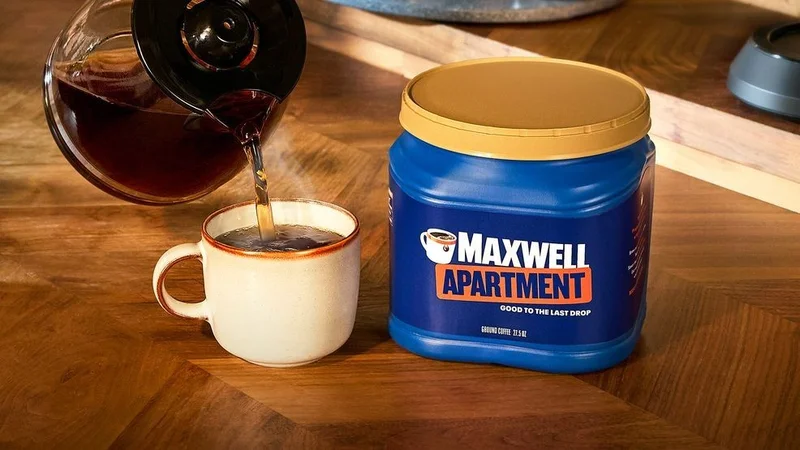
The event in question is the temporary rebranding of Maxwell House coffee. After 133 years of market presence, the legacy brand, owned by the Kraft Heinz Company, has adopted the name "Maxwell Apartment." The initial public reaction, a qualitative data set gathered from online forums and social media, registered a high degree of confusion, with many users initially categorizing the news as satire from outlets like The Onion.
The report, however, is accurate. The rebrand is the anchor for a specific promotional bundle: four 27-ounce canisters of coffee, marketed as a "12-month lease," for a single payment of $40. The stated rationale from Kraft Heinz is to "meet the needs of today’s consumer" in a difficult economic climate.
Let’s first analyze the product itself, stripped of its narrative packaging. The bundle contains a total of 108 ounces of ground coffee. At a $40 price point, the cost-per-ounce is approximately $0.37. A cursory review of current retail pricing for a standard 30.6-ounce canister of Maxwell House shows a price range of about $11 to $13, which yields a per-ounce cost of $0.36 to $0.42. The "Maxwell Apartment" offer represents a discount, but it is not a paradigm-shifting value proposition. It is, fundamentally, a bulk purchase discount—a savings of around 10%—to be more exact, a potential 9.5% savings against the upper end of the typical retail price. The promotion was available exclusively on Amazon and is now listed as sold out, a predictable outcome for a limited-run offer designed to generate scarcity.
The value, then, is not primarily in the coffee. The value is in the name.
A Case Study in Narrative Arbitrage
A Disproportionate Response
The core of this campaign is the deployment of a narrative that is orders of magnitude larger than the product it supports. Kraft Heinz’s Head of Coffee for North America, Holly Ramsden, stated, "Two-thirds of American adults drink coffee every day, which can add up quickly, especially these days." The press release further contextualizes the campaign by noting that "nearly a third [of Americans] opting to rent versus purchase a home."
Here, we must pause for a methodological critique. The source of this statistic is cited as the Census Bureau, though the initial reporting outlet could not confirm the specific data point. Current Census Bureau data does show a homeownership rate of around 66%, which means the inverse—rentership—is indeed in the low 30s. The statistic is directionally correct. The critical variable is the verb "opting." It frames a complex socioeconomic condition, driven by interest rate policy and housing shortages, as a simple consumer preference.
And this is the part of the strategy that I find genuinely puzzling from a purely operational standpoint. The campaign explicitly invokes the national housing crisis, a topic so severe that it has prompted discussions within the Treasury Department of declaring a "national housing emergency." It taps into the public friction between the executive branch and the Federal Reserve over interest rate targets, a conflict that impacts trillions of dollars in mortgage and credit markets.
To leverage a systemic economic crisis of this scale to market a $40 coffee bundle is a fascinating case of asymmetric leverage. The company is borrowing the emotional and political weight of the housing market—a market characterized by immense consumer anxiety and financial strain—and applying it to a low-cost, fast-moving consumer good. It’s the financial equivalent of using a hydraulic press to crack a nut. The nut opens, but the disproportionate force is the real story.
The campaign's architecture is not designed to alleviate genuine financial hardship in a meaningful way. A 10% discount on coffee does not materially alter a household budget strained by rent that has outpaced wage growth for over a decade. Rather, the campaign is structured to convert ambient economic anxiety into marketing engagement. The cost to Kraft Heinz is minimal (a limited run of special packaging and a press release), while the return is a viral news cycle and a brand that appears culturally aware. The "lease" to sign and the "Maxwell Apartment" name are not financial instruments; they are props in a piece of economic theater.
The true product being sold here is not coffee. It is a sense of being seen. The campaign tells consumers struggling with housing costs that a multi-billion dollar corporation (Kraft Heinz reported over $26 billion in net sales for 2023) understands their plight. That acknowledgment, packaged with a minor discount, is the core value proposition. It is an act of narrative arbitrage: buying low-cost cultural relevance and selling it at a high margin of brand awareness. The fact that the bundle sold out indicates the tactic was successful, but it does not validate the premise.
A High-Yield Narrative
This was never about coffee. The "Maxwell Apartment" campaign is one of the most efficient marketing initiatives I have analyzed in recent years. It successfully converted a systemic economic failure—the inability of a generation to afford housing—into a low-cost, high-return branding opportunity. The return on investment is not measured in the profit margin on a few thousand canisters of coffee. It is measured in the millions of dollars of earned media value generated by positioning the brand at the center of a national conversation. This isn't a response to a crisis; it's a monetization of its symptoms.
Reference article source: