
Article Directory
The initial data points are unambiguous. Mika Immonen, a Finnish national and professional pool player, died at the age of 52. The event occurred on or around September 28, 2025, with the proximate cause being a protracted conflict with Stage 4 colorectal cancer, a diagnosis made public in 2023. These are the terminal facts of the matter, the kind of clean data that closes a file.
But the file on Immonen is anything but simple. To understand the impact, one must first quantify the career. His professional moniker, "The Iceman," suggests a certain operational coldness, a detached execution of strategy. The data supports this branding. Immonen’s record is not one of a fluke or a hot streak; it’s a sustained pattern of high-level performance across multiple decades and disciplines.
The primary metrics are the world championships: the 2001 WPA World Nine-Ball Championship and the 2009 WPA World 10-Ball Championship. He remains the only player from Finland to secure world titles in both formats, an outlier statistic that points to adaptable, systemic dominance rather than specialized skill. The dataset expands. Two consecutive US Open Pool Championship titles (a feat of remarkable consistency in a high-variance tournament), a victory in the 2012 World Cup of Pool alongside his countryman Petri Makkonen, and a 2014 induction into the Billiard Congress of America Hall of Fame. The latter is a lagging indicator, a formal recognition of data already logged.
Perhaps the most telling metric of his era-defining consistency is the title he was given: "Player of the Decade" for the 2000s. This isn't a single-event trophy; it’s an aggregate performance score, an acknowledgment that over a ten-year sample size, his results surpassed all competitors. He represented Team Europe in the Mosconi Cup 15 times—or to be more precise, in 15 separate tournaments, a significant sample size for evaluating not just individual skill but the ability to perform within a team-based pressure system. The numbers paint a clear picture of a competitor who solved the geometric problems on the table with a ruthless efficiency that earned him his nickname and his legacy.
The Warrior and the Gentleman: Two Outputs, One Processor
The Unsolvable Problem
In 2023, a new variable was introduced into Immonen's operational environment: a medical diagnosis that fell outside the controllable physics of the billiard table. Stage 4 colorectal cancer is not a rack of balls; it’s a chaotic, biological system with a statistically grim prognosis. For an individual whose entire career was predicated on control, precision, and finding a path to victory, this represented a fundamentally different kind of opponent.
The typical response to such a diagnosis involves a withdrawal from public life. This is a logical, predictable course of action. Immonen’s response, however, deviated from the mean. He continued to compete. His return to the US Open in 2024 was, from a purely analytical standpoint, an act of defiance against statistical probability. His performance was not the objective; his participation was.
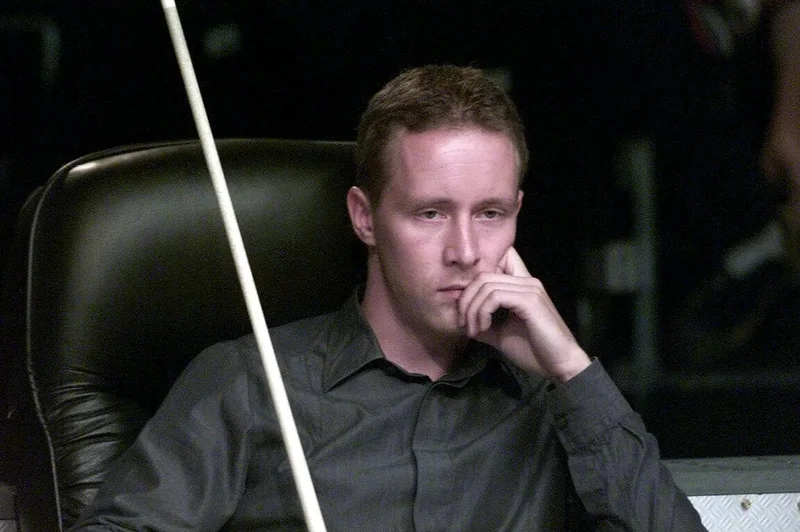
It is his own public statement from that period that provides the most valuable data point on his internal processing of the situation. In 2024, he said, "Part of the championship attitude is beating any obstacle that comes in front of you, just got to figure out how to win."
I’ve looked at hundreds of corporate turnaround plans and performance metrics, and this particular statement is unusual. It’s the direct application of a sports-performance heuristic to a terminal medical condition. He wasn't speaking in metaphors. He was framing his cancer as another opponent, another complex problem set for which a solution, a "win," had to be engineered. The fact that the opponent was his own cellular biology did not appear to alter the fundamental algorithm he had run his entire life: identify the problem, analyze the variables, execute a solution.
This mindset is the key to understanding the discrepancy between the "Iceman" persona and the public reaction to his death. The community’s sentiment, a qualitative data stream, can be parsed for patterns. Ronnie O'Sullivan, himself a data-point of genius in the adjacent world of snooker, called Immonen "one of the greatest pool players of the generation." This cross-sport validation is significant. Filipino stars Carlo Biado and Johann Chua expressed sentiments that centered on his legacy and an end to his suffering ("No more pain"). An anonymous fan comment provides the most concise summary: "A warrior on the table but a gentleman off it."
The consensus is clear: his peers and the public saw a duality. My analysis suggests this is a misreading of the data. The "warrior" and the "gentleman" were not two different modes; they were two outputs of the same core processor. The "gentleman" was the calm, controlled state of a system at rest. The "warrior" was the same system under load, executing its primary function: to compete. His final battle was not a change in character; it was the application of that same programming to a problem with no viable solution. He didn't know how to stop competing.
His death closes the statistical record. The wins, the titles, the accolades—they are all now fixed values. But the final two years of his life provide a fascinating, if tragic, addendum. We have a complete record of how "The Iceman" played pool. We now have a partial, but telling, record of how a system built for winning processes the certainty of a loss. He approached an unwinnable game with the same championship attitude he applied to every other rack of his life. The outcome was never in doubt, but the methodology was never compromised.
The Terminal Variable
The data suggests the "Iceman" moniker was more accurate than anyone knew. It wasn't a brand; it was an operating system. Mika Immonen approached his own mortality as a final, complex strategic problem. He analyzed the board, saw that he was mathematically snookered, and still proceeded to calculate the optimal shot. The final statistic of his life wasn't a win or a loss, but the unwavering application of his core algorithm against an unbeatable opponent. It was the last, most telling data point of all.
Reference article source: