
Article Directory
We build systems for a reason. In my world, it’s code and silicon; in the world of elite sport, it’s training regimens, performance metrics, and central contracts. These are elegant, often brutal, systems of optimization designed for one purpose: to produce a predictable, high-quality output. They identify weaknesses, they reward strengths, and when a component is deemed old, or broken, or simply no longer part of the forward-looking blueprint, the system archives it.
And so, the system spoke.
After Chris Woakes, a 36-year-old veteran of the English cricket machine, dislocated his shoulder on a damp London evening, the logic was inescapable. The component was damaged. The winter tour was out. The future was elsewhere. Rob Key, the director of the system, made the protocol public: Woakes was not "in our plans at the minute at all." His central contract, the hardware license for his international career, would not be renewed.
It’s a clean process. It’s logical. It’s the way high-performance machines are supposed to work. Data in, decision out. End of program.
But then, something beautiful and illogical happened. A ghost in the machine.
In the final innings of that final match, with the game already gone and his career effectively terminated by the system’s logic, Chris Woakes emerged from the pavilion. He walked down the famous steps at the Oval, his right arm bound tightly in a sling, to take his place at the non-striker’s end. He would not face a ball. He could not swing a bat. His presence was, by any practical metric, completely and utterly useless.
When I first saw the images of him walking out, I honestly just sat back in my chair, speechless. This is the kind of moment that reminds me why we build any of these complex systems in the first place. It’s not for the efficiency. It’s for the moments that defy it.
What Woakes did was an act of what I’d call ‘asymmetric value’—in simpler terms, an action whose emotional and cultural impact is wildly out of proportion to its practical, measurable outcome. He wasn't adding runs to the board; he was broadcasting a signal. It was a signal of pure, unadulterated human code: commitment to the collective, a final salute to the dream he’d chased since he was a kid in a back garden. In an age where we are obsessed with optimizing every last variable for victory, here was an act that had zero impact on the result, yet it may be the most valuable thing to happen on a cricket field all year.
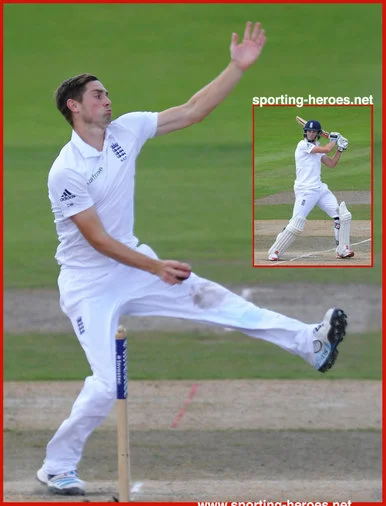
This wasn’t just any component glitching, of course. This was "The Wizard," a man whose code was deeply embedded in England’s operating system for 14 years. This was a key node in the network that delivered two World Cups. A man with his name on all three honours boards at Lord’s, a feat of multifaceted excellence few ever achieve. The 2023 Ashes hero who, with 19 wickets, single-handedly rebooted a series from a 2-0 deficit. His source code was impeccable. His home bowling average, a staggering 23.47, was more efficient than the legendary James Anderson or Stuart Broad.
But all that data, all those brilliant statistics, served only as the backstory for his final, defining act.
The Glorious Inefficiency of Being Human
When the Network Validates the Glitch ###
And the response was instantaneous, a global network of fans and players lighting up not because of a six or a wicket but because of a walk, a simple, painful walk that said more about the game than a thousand statistical analyses ever could—it’s proof that the human element is still the most powerful operating system we have. The Oval rose as one, a standing ovation not for a career, but for a single, glorious, pointless gesture. Shubman Gill, the opposing captain, called it "incredibly brave." The ECB Chair, Richard Thompson, noted that those images “reflected how much he cared about playing for his country.”
The system’s users—the fans, the teammates, the opponents—were telling the system’s designers what they truly valued. They weren't cheering for the cold logic of the machine; they were cheering for the beautiful, unpredictable, inefficient ghost within it.
Think of it like this. Woakes's final walk-out is the handwritten letter in the age of AI-generated emails. The email is infinitely more efficient. It’s optimized. It gets the job done. But the letter, with its imperfections and the physical effort it represents, carries a weight and a meaning that the optimized version can never replicate. Its value lies precisely in its inefficiency. That’s what we’re seeing here. It’s a paradigm shift in how we should measure value.
This brings us to a moment of critical reflection. As we continue to build more sophisticated, data-driven systems to manage everything from sports teams to global logistics, what are we risking? Are we designing protocols that have no room for the human glitch? Are we building a world so optimized that it forgets the why? We have to ask ourselves: are our systems serving us, or are we being programmed to serve them?
Chris Woakes, in his quiet, unassuming way, gave us the answer. He is moving on now, negotiating with his home county Warwickshire, exploring the franchise T20 circuit. The system will continue without him. But his parting gift was a system-wide diagnostic. It was a reminder that the most profound moments in any human endeavor, whether in sport or science or art, are rarely the ones you can plan for in a spreadsheet. They are the moments of spontaneous, illogical, breathtaking humanity. They are the moments we choose to show up, even with one arm in a sling, when the system has already counted us out.
And you? What is the system telling you is logical, efficient, or planned? And what is the illogical, human, and brave thing you know you need to do anyway?
The Signal in the Noise ###
The data told us Chris Woakes' career was over. The system processed his exit. But his final, illogical act was the real signal. It reminds us that the most valuable data isn't found on a spreadsheet; it's encoded in the human heart. And that is a protocol we must never, ever let become obsolete.
Reference article source: