Article Directory
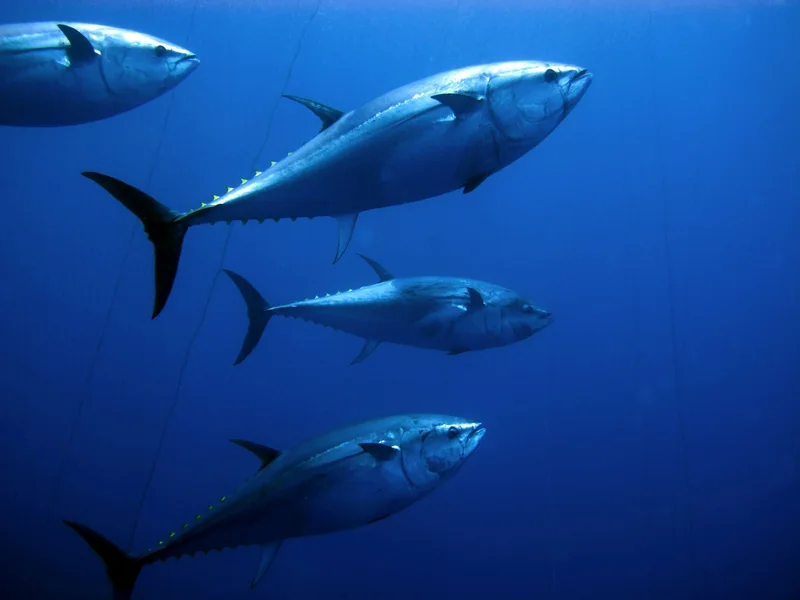
The schools of fish arrived east of Cape Cod in late September. Bluefin tuna, ranging from a respectable 40 inches to formidable 90-inch specimens, began feeding aggressively on sand eels. The water boiled with activity. Yet, for the recreational and commercial boats on the scene, it was an exercise in restraint. The season is closed. Every hookup, whether on a jig or live bait, was a catch-and-release affair. A tangible asset, right there in the water, but one that could not be monetized or brought to shore.
Simultaneously, several hundred miles south, reports trickled in of giant bluefin tuna scattered from Point Judith to the grounds south of Shinnecock. And three thousand miles west, the Southern California season had been open since before mid-July, with local commercial fishermen like Conner Mitchell of Dudley Market supplying a hungry Los Angeles restaurant scene with fresh, Pacific bluefin. A recent market report from week 39 of 2025 noted Norwegian bluefin arriving in Japan at a landed price of $32/kg.
The data points seem disconnected, but they paint a clear picture of a global, high-value commodity. What’s interesting is the discrepancy between the observable abundance in some areas, the strict quotas, and the persistent public narrative that surrounds this particular fish. For years, the story of the bluefin has been a simple one: an endangered, overfished species loaded with dangerous levels of mercury. It’s a compelling narrative. My analysis suggests it is also an increasingly outdated one.
The first part of that narrative—scarcity—is beginning to fray at the edges. A June 2024 article from NOAA Fisheries ran with the headline, "Pacific Bluefin Tuna: From Overfished to Sustainable Harvest." This wasn't marketing copy; it was the result of a 2022 stock assessment which determined the spawning population had recovered to a significant degree. The specific figure was 23.2% of its potential unfished biomass. To be more exact, the international scientific committee for tuna in the North Pacific Ocean concluded that the stock was no longer subject to overfishing and was not overfished. This is the threshold (formally, it’s 20% of unfished biomass) considered sufficient to balance harvesting with continued population growth. The coordinated management between the US, Mexico, and Canada appears to be yielding a measurable result. The fish are returning.
The Missing Variable: A Tuna's Built-In Detox System
The Mercury Signal vs. The Noise
This brings us to the second, more stubborn part of the narrative: toxicity. The official guidance from the FDA is cautious, advising consumers—especially vulnerable populations like pregnant or breastfeeding women and children—to choose seafood lower in mercury. Bluefin, a large, long-lived predator at the top of the food chain, has long been the poster child for mercury risk. The logic is straightforward: mercury bioaccumulates up the food chain, so the biggest predators have the highest load.
This is where the data gets genuinely interesting. A study published in Environmental Science & Technology by a team led by Alain Manceau of France's National Centre for Scientific Research (CNRS) introduces a critical nuance that is largely absent from the public health conversation. The researchers didn't just measure how much mercury was in Atlantic bluefin tuna; they used advanced X-ray spectroscopy to determine its chemical form.
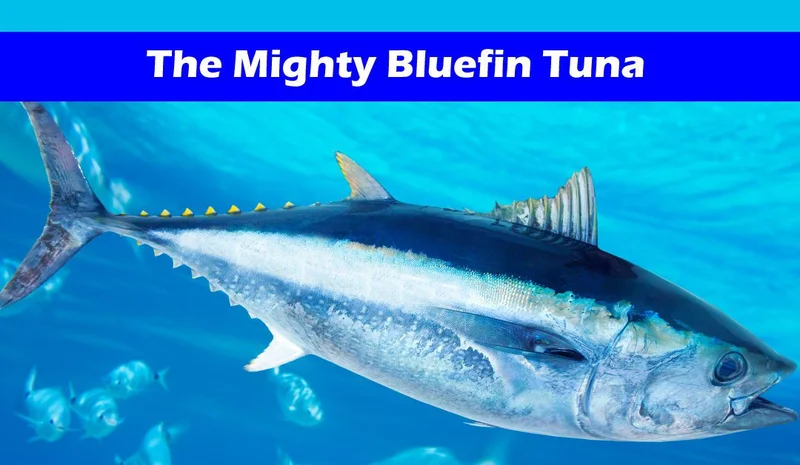
Their findings fundamentally challenge the simple "more mercury equals more danger" equation. They discovered that a significant portion of the mercury in bluefin muscle tissue is not the highly toxic methylmercury we fear. Instead, the tuna’s biology actively converts it. The fish binds the methylmercury with selenium, creating a less toxic compound known as a mercury-selenium complex (Hg(Sec)4). The process doesn't stop there. This complex can be transported to organs, primarily the spleen, where it is further degraded into mercury selenide, a substance the researchers describe as being mineral-like and far less reactive in the body.
This is a profound biological insight. It suggests the Atlantic bluefin tuna possesses a remarkably efficient, built-in detoxification system. And this brings me to a methodological critique of the standard public health guidance. The FDA and other bodies typically measure "total mercury." But if a significant percentage of that total is being rendered inert by the fish itself, then "total mercury" is a crude, and potentially misleading, metric for actual risk. The lead researcher, Alain Manceau, stated it plainly: toxicity evaluations should be measuring methylmercury, not total mercury, as the other forms can be harmless.
I've looked at risk models for years in a different context, and using a broad, lagging indicator like "total mercury" when a more precise, causal indicator like "methylmercury concentration" is available is a fundamental analytical error. It’s the kind of oversimplification that obscures the actual mechanism at play. We are measuring the smoke, not the fire.
Now, it is critical to state the limitations of this data. The study focused on Atlantic bluefin tuna, a distinct stock from the Pacific bluefin being caught off California. We don't yet have comparable data confirming the Pacific stock performs the same biological alchemy. However, it presents a compelling hypothesis that the genus may have evolved this defense mechanism, which would radically alter the risk profile for the species as a whole. It also helps explain a long-standing paradox: how can a predator with such high mercury loads thrive and reproduce so successfully? This detoxification pathway provides a plausible answer.
This new data refracts the entire picture. On the West Coast, fishermen like Conner Mitchell aren't just catching fish; they're adopting sophisticated Japanese handling techniques like ikijime and shinkeijime. Running a wire down the spinal column to prevent nerve signals from firing post-mortem isn't just for show. It prevents lactic acid buildup and promotes the amino acids that create umami, improving taste, texture, and shelf life. This is the behavior of a market treating a resource not as a simple bulk commodity, but as a high-performance biological product whose value can be maximized through precise, data-driven handling. It’s a level of sophistication that matches the complexity we’re now discovering in the fish’s own biology.
The story of the bluefin tuna is no longer a simple morality play. It's a complex system of international fishery management, recovering populations, and a surprising biological capability that forces us to question our long-held assumptions. The narrative is lagging the science.
Revising the Thesis
The public conversation about bluefin tuna is a classic case of a thesis failing to update with new, dispositive data. We are operating on an old model calibrated for scarcity and simplistic toxicity. The reality on the water—and in the lab—points to a more complex and dynamic system. The recovery of the Pacific stock is a quantifiable success in resource management. The emerging science on mercury detoxification suggests a biological reality far more nuanced than our public health warnings reflect. The market, with its focus on quality and precise handling, is already adapting. The only thing that hasn't caught up is the story we tell ourselves.
Reference article source: